
In brief
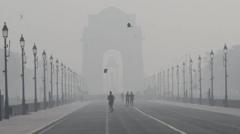
India's capital, Delhi, is engulfed in severe air pollution as recent data reveals toxic levels reaching alarming highs, raising health concerns among residents.
The city reported drastic spikes in pollution levels, exceeding 25-30 times the safe limits recommended by the World Health Organization (WHO) in various locations last week. Experts predict an increase in pollution due to adverse weather conditions, Diwali festivities, and ongoing crop residue burning in neighboring states over the coming days.Yearly, Delhi alongside other northern cities experiences hazardous air quality from October to January, leading to business interruptions, school closures, and office shutdowns. Reports from the government-operated Safar website indicated that PM 2.5, microscopic particles that infiltrate deep into the lungs and pose serious health risks, soared as high as 350 micrograms per cubic meter on Monday. Air quality is deemed "very poor" when PM 2.5 levels hit 300 to 400, while levels categorized as "severe" range from 400 to 500.During winter months, Delhi frequently transforms into a smog-laden environment, attributed to a mix of smoke, dust, low wind speeds, vehicular emissions, and neighboring farmers’ burning of crop stubble to clear land after harvest. Farmers from states like Punjab and Haryana cite the urgent need for financial and technical assistance for alternative residue management strategies, yet government initiatives remain ineffective.Intruding further into the pollution crisis, the Diwali festival, with its customary fireworks, exacerbates air quality. Despite a government-imposed ban on the production, storage, and sale of fireworks ahead of the celebration, enforcement has historically proven limited as residents often procure fireworks from regions where restrictions do not apply.In response to the imminent crisis, Delhi's authorities have activated the Graded Response Action Plan (GRAP), which prohibits activities involving coal, firewood, and non-emergency diesel generator usage. Vulnerable populations have been advised to remain indoors, while officials have restricted construction work within the city and encouraged the use of public transport to mitigate emissions.As weather conditions and cultural practices continue to coincide with the yearly air quality decline, residents of Delhi face the immediate threat of prolonged exposure to toxic air, prompting calls for effective solutions to tackle pollution in the capital.
