
In brief
The 2024 election year unveiled a troubling trend, as a significant portion of 3.6 billion individuals experienced major elections, yet the advancement of women in political roles nearly stagnated. With new parliaments showing a decline in female representation in many countries, experts express concern over the implications of this trend for future gender equality in politics.
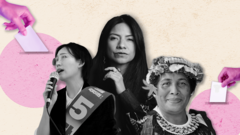
In 2024, as major elections unfolded across 46 nations, representing nearly half of the world’s population, a startling trend emerged: the growth of women's political representation reached its slowest rate in two decades. This year saw 27 newly elected parliaments, including those in the United States, Portugal, India, and South Africa, electing fewer women than before the elections. Notably, the European Parliament also marked its first-ever decline in female representation, a significant regression.The Inter-Parliamentary Union (IPU) reported that in almost two-thirds of these countries, the number of women elected diminished. While some nations, such as Mongolia and Jordan, made strides forward, the overall increase in female representation across the globe was a mere 0.03%. This comes on the heels of a period where global female political representation doubled from 1995 to 2020.Mariana Duarte Mutzenberg, a gender statistician at the IPU, pointed out that the progress achieved remains "too fragile," indicating how some countries, like Tuvalu, may find themselves with no women in government positions at all. Currently, women compose 27% of parliaments worldwide—only 13 countries are nearing gender parity.Despite gains seen in regions with gender quotas, such as Mongolia, which boosted its female representation from 10% to 25% following a 30% candidate quota for women, the lack of such measures in other areas continues to restrict women's political participation. Countries without quotas average 21% female representation, while those employing quotas see this rise to 29%.Political will, especially concerning ministerial roles, is crucial for boosting female representation. Women often occupy limited roles within cabinets, typically focused on social issues, which experts have identified as a missed opportunity for broader societal impact. The underrepresentation of women in decision-making bodies hinders not only equality but also effective governance and economic development.Numerous fundamental barriers inhibit women's engagement in politics. Research indicates an "ambition gender gap," with women less likely to consider themselves fit for senior leadership positions. Additionally, financial obstacles present difficulties for many women in campaigning, compounded by societal expectations regarding caregiving responsibilities, which often fall disproportionately on them.The nature of electoral systems is also a contributing factor, as those utilizing proportional representation tend to elect more women compared to jurisdictions with first-past-the-post systems. Moreover, around the world, studies illustrate a spike in both online and offline attacks targeting women in politics, culminating in a chilling effect that discourages potential female candidates from pursuing office.While there are positive shifts in certain regions—like the slight uptick in women's political representation in South Korea—the backlash against female empowerment signals a troubling trend. As pointed out by experts, fostering an environment conducive to women's political success is vital. The evidence suggests that gender-diverse leadership teams not only yield better decisions but are also pivotal for sustainable outcomes in peace negotiations.In summary, the findings from this year’s election cycles underscore an urgent need for renewed commitment to gender equality in politics, emphasizing that the representation of women should be seen as directly linked to effective governance and societal well-being. As advocated by Julie Ballington from UN Women, it’s essential to transition the narrative from recognizing the underrepresentation of women towards acknowledging the overrepresentation of men in political institutions.



