
In brief
As President Yoon Suk Yeol declares martial law in South Korea for the first time in 45 years, citizens grapple with painful memories of authoritarian rule, sparking protests and a call to preserve democracy amidst concerns about political motivations behind the declaration.
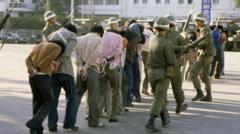
In a startling turn of events, South Korean President Yoon Suk Yeol recently declared martial law, igniting fierce reactions across the nation. This marked the first time in 45 years that such measures were taken during a period of democratic governance, causing many to reflect on the nation’s traumatic past under authoritarian rule.Eighty-seven-year-old Koh Jae-hak remains haunted by the memories from April 1960 when he witnessed soldiers brutally gunning down protestors, part of a nationwide outcry against the then-dictatorial president Syngman Rhee. As thousands rallied for his resignation, the government responded with deadly force and soon declared martial law. For decades, South Korea endured multiple rounds of similar measures aimed at curbing dissent, all too familiar with the repercussions of military crackdowns on civil liberties.Democracy has since taken firm root in South Korea, cherished by its citizens as a hard-fought right. Yet, Yoon’s recent declaration stirred unsettling echoes of the past. Lawmakers raced to the national assembly amidst chaos, while citizens mobilized to resist military attempts to reinforce the order. Initial worries about a North Korean threat quickly morphed into skepticism as Yoon’s vague justifications drew parallels to his previous statements aimed at suppressing political opposition.The psychological scars from previous martial law periods remain vivid for many older South Koreans. Environmental activist Kelly Kim, who heard stories about the past from her parents, expressed a chilling fear of repeating history, highlighting that martial law once curbed press freedom and civil organization. Numerous accounts echo this sentiment as younger citizens grapple with the prospect of curtailed liberties. Fifteen-year-old Kwon Hoo voiced his initial excitement of a school day off which swiftly transformed into anxiety about returning to repressive conditions.However, the national consciousness regarding martial law is not unanimous. While a significant portion of the populace recognizes the painful history, some, particularly older individuals, reflect on the period as a necessary evil for the establishment of stability and democracy. Kang Hyo-san, 83, argued that military interventions were sometimes pivotal in curbing the ideological struggle against communism, contrasting it with the bloodshed seen in other global contexts.Despite these differing views, Koh and Kim, alongside many others, firmly reject Yoon’s justification for martial law this time around. They insist that the hard-earned freedoms should not be compromised again, stemming from an intense historical consciousness that actively resists a return to authoritarianism. As protests swarm the streets, citizens remain vigilant, determined to safeguard their democracy and ensure that the lessons of the past guide their present and future.
