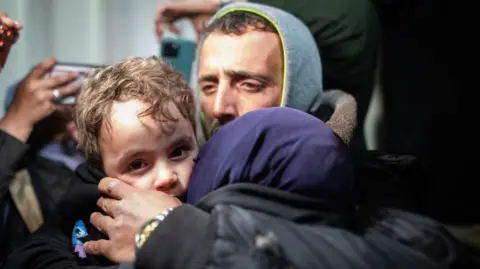
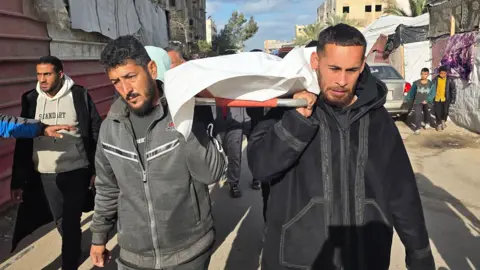
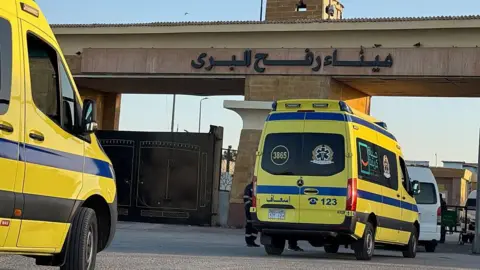
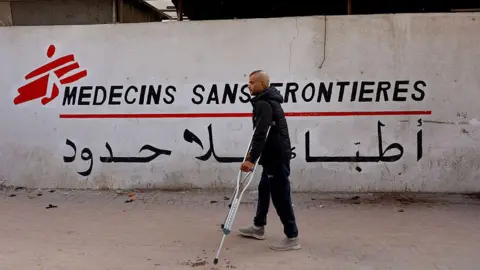
As a key part of the recently established cease-fire agreement between Israel and Hamas, the Rafah border crossing saw its first operational day in nine months, allowing for the evacuation of wounded Gazans to Egypt on Saturday. Medical staff quickly transported patients, highlighting the urgent need for medical care that has been exacerbated by devastating war conditions.
Health officials within Gaza reported that despite the urgent need, only 50 patients could cross on the first day, with thousands still awaiting critical treatment. Egyptian state television broadcasted the arrival of ambulances bringing the injured across to Egypt.
This pivotal crossing had previously been shut following Israel's military operations in Rafah, which significantly disrupted medical services. Hospitals, including the well-known Al-Shifa Hospital, suffered extensive damage during the conflict, with claims that Hamas misused some medical facilities militarily. This has intensified voices calling for streamlined medical evacuations and aid.
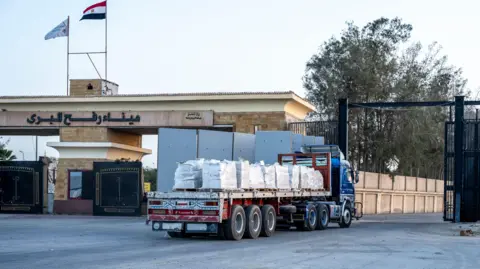
The cease-fire agreement stipulates that daily evacuations of 50 wounded militants would be approved by both Israeli and Egyptian authorities. In addition, it promises a gradual lifting of restrictions for medical evacuations and the recommencement of trade and goods movement through Rafah; however, specific implementation timelines remain unclear.
The World Health Organization's representative for Gaza, Rik Peeperkorn, characterized Saturday’s event as a favorable development but insisted on a need for greater urgency in helping those in desperate need. Recent assessments indicate that about 12,000 to 14,000 individuals require medical attention outside Gaza.
Historically, the Palestinian Authority managed the Gaza-Egypt border until the conflict escalated; following the cease-fire, new security arrangements are expected to involve both Israel and Egypt as well as the Palestinian Authority. Nonetheless, Israel maintains control over the crossing's security, meaning that entry is contingent upon approval from Israeli security services.
Despite international pressure, Israel shows hesitancy towards the notion that the Palestinian Authority would lead postwar governance in Gaza, drawing attention to ongoing geopolitical complexities in the region. As the situation unfolds, both the humanitarian and political implications are set to dominate discussions on the future of Gaza and its residents.