
In brief
Intense fighting in Goma, DR Congo, has led to at least 700 deaths and thousands injured, as M23 rebels advance southward. The conflict, dating back to the 1990s, raises concerns about the humanitarian crisis exacerbated by ongoing violence.
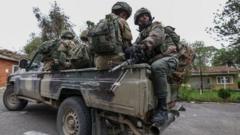
The United Nations has reported alarming figures revealing that at least 700 people have lost their lives due to the escalating violence in Goma, the largest city in eastern Democratic Republic of Congo, since the fighting intensified on Sunday. UN spokesperson Stéphane Dujarric stated that over 2,800 individuals have sustained injuries as M23 rebels, allegedly supported by Rwanda, took control of North Kivu province's capital. The rebels are now reportedly advancing south toward Bukavu, the capital of South Kivu province.The ongoing conflict in eastern DR Congo has historic roots, persisting since the 1990s, but has rapidly intensified in recent weeks. The M23 group, composed primarily of ethnic Tutsis, claims to be fighting for the rights of minorities, whereas the DR Congo government accuses them of aiming to seize the region's extensive mineral resources.Dujarric disclosed on Friday that the casualty reports were compiled by the World Health Organization (WHO) in collaboration with the DR Congo government and local partners, covering the period from Sunday through Thursday. He forewarned that the death toll could continue to rise.In an effort to halt the M23's advance, the DR Congo military has reportedly established a defensive perimeter along the critical route between Goma and Bukavu, as per the AFP news agency. In response to the threat, numerous civilian volunteers have rallied to defend Bukavu, with one individual expressing, "I am ready to die for my country."Governor Jean-Jacques Purusi Sadiki of South Kivu asserted to Reuters that government forces and their allies were managing to hold back the advancing rebels, although this claim remains unverified by independent sources. Earlier this week, M23 leaders indicated their intention to persist in their offensive until reaching the capital city, Kinshasa, located approximately 2,600km (1,600 miles) away to the west.DR Congo's foreign minister, Thérèse Kayikwamba Wagner, accused Rwanda of illegally occupying DR Congo and seeking regime change, arguing that the international community has historically failed to hold Rwandan President Paul Kagame accountable for his actions. A government spokesperson from Rwanda, Yolande Makolo, countered these assertions by stating that Rwandan forces were deployed solely to prevent the conflict from spilling into their own territory. Last year, UN experts estimated that Rwanda had deployed between 3,000 to 4,000 troops alongside the M23 in eastern DR Congo. On Friday, following a crisis summit in Zimbabwe, the Southern African Development Community (Sadc) regional bloc expressed its support for DR Congo, reaffirming its commitment to assisting in the preservation of the country's independence and territorial integrity. The bloc has dispatched peacekeeping troops, primarily from South Africa, to aid in combatting groups such as the M23 and restoring stability to the region.The ongoing conflict has led to significant humanitarian challenges, impacting the availability of food, clean water, and medical supplies. Shelley Thakral from the UN's World Food Programme reported that residents in Goma are facing critical shortages due to disrupted supply chains as a result of the violence.Since the beginning of 2025, the UN refugee agency has indicated that over 400,000 individuals have been displaced by the ongoing violence. The DR Congo, Africa's second-largest nation, is approximately two-thirds the size of Western Europe and shares borders with nine different countries. Previous conflicts in the country in the 1990s escalated into wider regional wars, often referred to as Africa's World Wars.


