
In brief
In Tirana, Albania, demonstrations have turned into violent confrontations with riot police for the seventh consecutive day, with authorities reporting 295 injuries, 186 of them police. The protests, largely fueled by university and high‑school students, are driven by demands for better education, anti‑corruption measures and Rama’s resignation. Premier Edi Rama has accused foreign agitators of coordinating the unrest, while activist Sidorela Vatnikaj claims the protests are a response to deep‑seated inequality and failed electoral promises. Human rights lawyers report chaotic police tactics and a lack of evidence in court, fueling further mistrust.
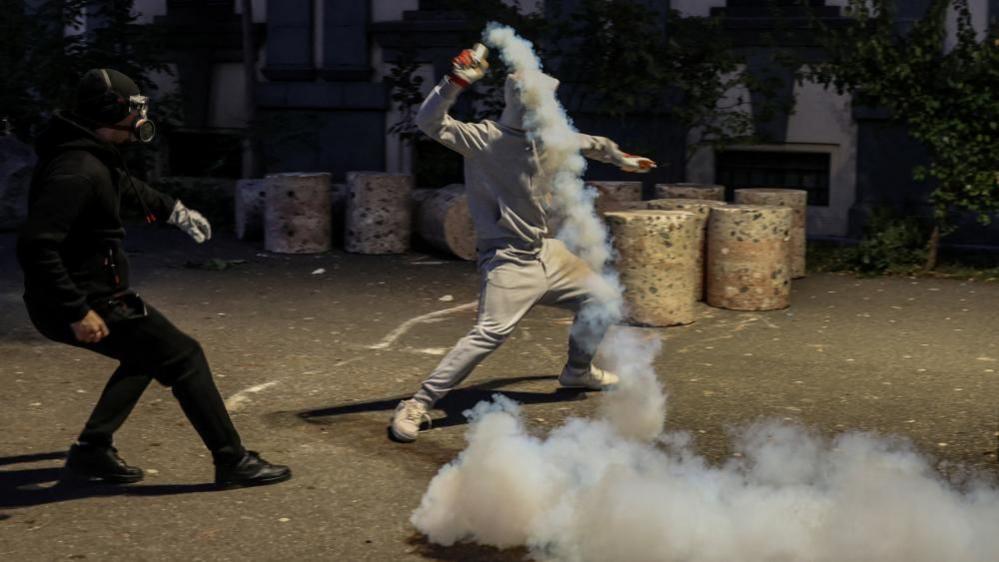
Seventh-day clashes between student demonstrators and riot police have escalated into violent confrontations that have put the capital under a state of emergency.
Albanian authorities report that 295 civilians and 186 police officers have been injured since the first protest on Thursday, with police citing shrapnel injuries, tear‑gas exposure and physical assaults.
Prime Minister Edi Rama has chastised the nation for signing what he calls a “state‑parliamentary capitulation” to what he describes as “dark forces” from abroad. In an address to police chiefs, Rama reportedly brandished a rock hurled by a protester and warned that negotiations would bring the state to its knees.
The demonstrations centre on a mix of grievances: a call for improved university infrastructure, accusations of systemic corruption and an overarching demand that Rama’s 13‑year rule end. Riot police have blocked access to government buildings in Tirana, while supporters of the opposition gathered at Rinia Park, preparing marbles and cobbles as homemade projectiles.
“The police and the protesters have both used excessive force—our streets are a battlefield,” warns Gentian Sejrani, a human rights lawyer who assists more than 100 detainees. “The police rarely present evidence, and many arrests occur without connections to the protests.”
While riot police advance down avenues with armored trucks spewing tear‑gas canisters, volunteers in reflective jackets disperse saline solution to counteract the chemical attacks inside makeshift cafés. A 27‑year‑old activist, Sidorela Vatnikaj, a master’s student, explains that she spends her days coordinating aid supplies, navigating police lines and maintaining contact with supporters spread across the city.
Vatnikaj, who has been active in anti‑government demonstrations for eight years, says she is “uncomfortable with the violence but believes the police sparked it.” She notes the economic hardship faced by many families outside the country and urges for a technocratic government for the next year to pace the country toward credible elections.
The future of Albania’s political landscape remains uncertain, as the continuous violent protests could open the door for international mediation or deeper domestic polarization.



