In brief
Social media voices objections to the presence of male ministers at a conference dedicated to women's issues, sparking broader discussions on women's rights in Somalia.
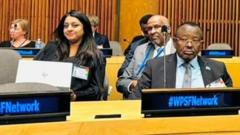
In a significant misstep, Somalia's Family Minister Gen Bashir Mohamed Jama drew large-scale condemnation after posting photographs on social media depicting himself and another male representative at a United Nations conference centering on women’s issues. Critics, including prominent Somali author and human rights advocate Fathiya Absie, voiced that the decision to have men at the forefront of discussions meant for women is "tone-deaf." The controversy drumrolled as a senior civil servant clarified to the BBC that, although there were two women among Somalia's four-person delegation to the Women, Peace and Security Focal Points Network event in New York, their omission from the shared photos intensified the backlash. Among the delegates were Iman Elman, a respected military officer, and Sadia Mohammed Nur, a civil servant closely tied to the Ministry of Family and Human Rights Development.The incident followed a public uproar over the government's recent decision to rename the previously titled Ministry of Women and Human Rights Development to the Ministry of Family and Human Rights Development, a move seen as diminishing the focus on women's specific needs and struggles. Observers criticized this renaming as a form of erasure, compelling many to question the government's acknowledgment of women's issues in a country already grappling with significant challenges related to gender equality.While some defended the decision to have male leaders represent the Ministry, citing their experience and capability, the voices advocating for increased female representation gained traction. Gen Jama's photos incurred ridicule online, leading many to express concerns regarding the government's seriousness in addressing women’s rights.Historically, women in Somalia have played pivotal roles in peacebuilding and activism, yet political representation remains significantly skewed, with few women holding influential positions. Advocates, including Absie, argue that the recent trends suggest a regression in women's influence in the political landscape.As calls for change echo louder, Mr. Bashir from the Family Ministry acknowledged the need for greater efforts to ensure women's representation in collaborative efforts moving forward, suggesting a potential shift in approach to remedy growing concerns among advocates for women's rights in Somalia.