In brief
With the rise of Hayat Tahrir al-Sham in Syria, musicians are cautiously optimistic about preserving their vibrant scene developed through years of civil unrest. They aim to engage with the new leadership while safeguarding their artistic freedom amid fears of potential cultural repression.
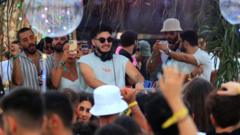
As Syria continues to navigate its post-civil war landscape, the country's musicians are confronting an uncertain future under the new leadership of Hayat Tahrir al-Sham (HTS), an Islamist group formerly linked to al-Qaeda. Known for their thriving electronic and heavy metal music scenes that emerged during the almost 14-year conflict, these artists are feeling both hopeful and cautious about their right to create.DJ Maher Green urges his fellow musicians to unite in their approach to HTS, as he emphasizes the need for a well-organized dialogue. "We have to be organized before we go to them, because they are so organized," Green stated, highlighting the need for an agenda that focuses on promoting freedom and expression through music.The Assad regime had previously stifled creative outlets, particularly targeting underground rock bands from the late 1990s. The suppression was so severe that Nael al-Hadidi, who once owned a music shop, battled intelligence forces simply for selling albums deemed subversive. "They made me sign some papers that I wouldn't do it again," he recalled, noting the dramatic cultural shift that occurred as the regime's grip weakened during wartime.With the chaos of war allowing a heavy metal scene to flourish, many artists, like Wajd Khair, have found their voices again post-conflict. Khair had abandoned music when the violence escalated in 2011, feeling incapable of articulating the trauma of the times. Now, he embraces the chance to perform again but remains cautious about the potential implications of HTS’s rule. "We have to be more bold... It's not just Islamic Front and Islamic State here," he stated, advocating for the visibility of the artists’ diverse contributions.While HTS has made promises to respect cultural rights, instances of censorship, including the closure of the Opera House which was soon revealed to be a false alarm, have left some wary. Events outside public venues are demonstrating a determination among artists to maintain their cultural presence. Choir director Safana Bakleh and her group have taken to the streets to perform revolutionary songs amidst the enthusiastic encouragement of youth.Musicians like Green are adamant about the necessity for a cohesive strategy in presenting their art to the new authorities. He acknowledged the ongoing challenges while asserting the need for creative exploration, combining traditional influences with new electronic trends. "We were here in Syria before the war, and inside during the war, (when) we had so many experiments. We evolved so much. We have so much mixed culture," he shared.The upcoming interactions between Syrian artists and HTS will be marked by a vigilant effort to protect the artistic freedoms they’ve fought to preserve—a delicate balance of optimism and apprehension in a landscape still rife with uncertainty.