
In brief
Displaced Israelis voice concerns over security and distrust in ceasefire agreement while fearing the potential resurgence of Hezbollah.
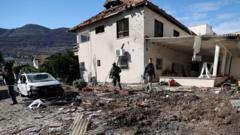
Amid ongoing turbulence, a recent ceasefire agreement in the conflict with Hezbollah has ignited a wave of anger and distrust among displaced Israelis in northern parts of the country. Prime Minister Benjamin Netanyahu hailed the deal, framing it as a strategic win for Israel following what he described as “unprecedented achievements” in a protracted war involving multiple fronts. He asserted that Israel had severely diminished Hezbollah's capabilities, suggesting that the group had been set back “tens of years.”Despite Netanyahu’s claims of an Israeli military stronghold in the region, fears persist among residents and political opponents who accuse him of capitulating. With the ceasefire, Netanyahu argued for the necessity to focus on the Iranian threat. He emphasized that Israel would maintain its military autonomy to respond to any emerging dangers from Hezbollah, which has been involved in cross-border attacks and rocket assaults.The Israeli army reported hitting 180 targets in Lebanon over the previous 24 hours, underscoring the ongoing tensions despite the ceasefire declaration. As the situation is precarious, analysts are cautious, noting that neither side desires to portray the ceasefire as a concession.Polling data reflects a divided sentiment in Israel regarding the ceasefire, with over 80% of Netanyahu's core supporters opposing the agreement. Many residents, having fled their homes in the north, are expressing frustration and fear. One local educator described the ceasefire as “irresponsible and hasty,” while displaced individuals like Rona Valency articulated deep unease about the idea of returning to their homes amid an unstable security situation.Valency, who was evacuated from kibbutz Kfar Giladi, voiced skepticism about the rebuilding efforts of Lebanese neighborhoods across the border. Residents are haunted by images of Hezbollah's potential resurgence, leading to a pervasive mistrust in peace agreements and international oversight.Her husband, Onn, echoed the concerns, insisting that true security would only be restored if the Israeli army maintained its presence at the border. "I don’t trust the Lebanese army, nor the Americans,” he proclaimed, underscoring a strong preference for reliance on Israeli military forces.While Netanyahu showcases military successes from the conflict—such as weakening Hezbollah’s firepower and disrupting its ties with Hamas—concerns loom about the consequences of continuous war. With a fatigued military and a struggling economy, many voices within Israel are questioning the wisdom of pursuing a ceasefire in the north while the war against Hamas continues unabated in Gaza.As the region waits for developments, the fate of displaced Israelis remains uncertain, with many feeling unsafe and wary in a volatile environment.
