
In brief
Saturday’s riots across France sparked a national debate about responsibility, with police, politicians and students all pointing fingers at different actors. Some observers link the violence to left‑wing movements, while others argue it was opportunistic looting. Prime Minister Lecornu and Interior Minister Nuñez have blamed far‑left groups, whereas the radicals deny any hand. At the same time, voters voiced frustration over rising costs and a perceived failure of the state, showing how social unrest is reshaping the political terrain.
The streets of Paris and other French cities were riven by limp, burnt shops and fleeing crowds last Saturday, igniting a national feud over accountability. The French government, its politicians and opposition parties have all rushed to lay blame, amplifying a domestic crisis already thickened by economic strain and a looming election.
The Scene of Chaos
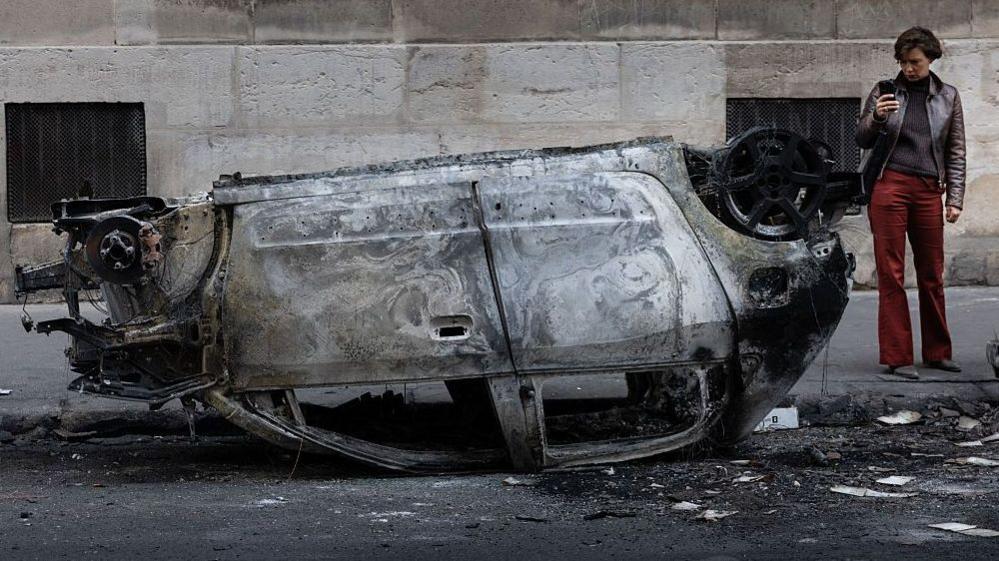
A woman captured on camera the wreckage of a car by a tree‑lined Parisian street, where shattered glass speckled the asphalt. The surrounding business windows are scarred with graffiti that denounces the police and points a finger at the far‑left. Many of the raiders seemed to act on impulse, then hurried online to sell designer sneakers and other goods in a brief, uncoordinated frenzy.
Political Finger‑Pointing
Prime Minister Sebastien Lecornu and Interior Minister Laurent Nunez have said the violence is a deliberate act by “hard left” groups and accused the France Insoumise movement of flaring tensions ahead of the 2027 presidential election. By contrast, LFI co‑leader Jean‑Luc Mélenchon states the protests have been hijacked by radical activists and denies any concerted plan for unrest.
President Emmanuel Macron has demanded a clear explanation, while the police report a shortfall of officers on the ground, a crack that critics say contributed to the disorder.
Students Speak Out
In the suburb of Saint‑Denis I met Lisa Cordat of the FSE student union. She insisted protests were organized by student groups using messaging apps, not “mobs sent by politicians.” A younger protester, Lina, told me the quarter was still nervous and that people feel ignored by the establishment; they have “no voice.”
Public Frustration Beyond National Borders
France is not alone. This weekend also saw violent protests in Italy, Portugal, Albania and Belgium, showing a pan‑European unrest fed by soaring living costs, shrinking public services and the resonant call for change by the Gen‑Z generation. Data from the Pew Institute shows 69% of French voters are dissatisfied with democracy, a sentiment echoed in Spain, Italy and the United States.
The Politics of Scapegoating
Right‑wing politician Marine Le Pen seized the moment with a televised video that alone pledged to deliver “law and order.” She blamed the left for stirring chaos, framing the riots as a strategy to deter voters before the upcoming election. LFI has denied any involvement, arguing the assaults were “tools of fringe militants,” not a broader movement.
Where does responsibility lie? For many, the answer is complex. A broad mix of opportunistic looting, a small number of well‑planned attacks and an impatient crowd co‑exist, while a government distracted by internal politics may have let the turmoil take root. Lessons for France lie in addressing the socioeconomic grievances that give rise to anger, rather than simply assigning blame.

