

In brief
The National Assembly voted 291 to 241 to create a legal framework for assisted dying in France, after repeated defeats in the Senate. The law allows terminally ill adults to request a doctor‑administered lethal dose when suffering is unbearable and incurable. Prime Minister Sébastien Lecornu will send key provisions to the Constitutional Council for review. The bill places a two‑day reflection period on patients and outlines safeguards for consent, expanding France’s options to those in distress.
The National Assembly has finally passed a law giving French adults a legal right to assisted dying under strict conditions, overcoming three defeats in the Senate. The vote went 291 to 241, signalling a major shift in a country that has long divided politicians, the Catholic Church and some doctors.
According to the new bill, patients must have a serious and incurable illness that leaves them with constant physical or psychological suffering, untreated or unrelievable. They must freely express their wish to a doctor, who will decide after consultation within 15 days. After a 48‑hour reflection period, the patient must self‑administer the lethal substance; if incapable, a doctor or nurse may do it under the doctor’s verification on the day.
Prime Minister Sébastien Lecornu will refer portions of the bill to France’s Constitutional Council for constitutional assent. He said the Council should focus on the reflection period, the potential for impaired judgement to impair consent, and the role of care facilities that traditionally provide palliative treatment.
France now stands among several European countries that have legalized assisted dying, after the Netherlands and Belgium in 2002. The United Kingdom is also preparing a bill for England and Wales to return to Parliament in September, while Switzerland continues to allow assisted suicide for those who act unselfishly.

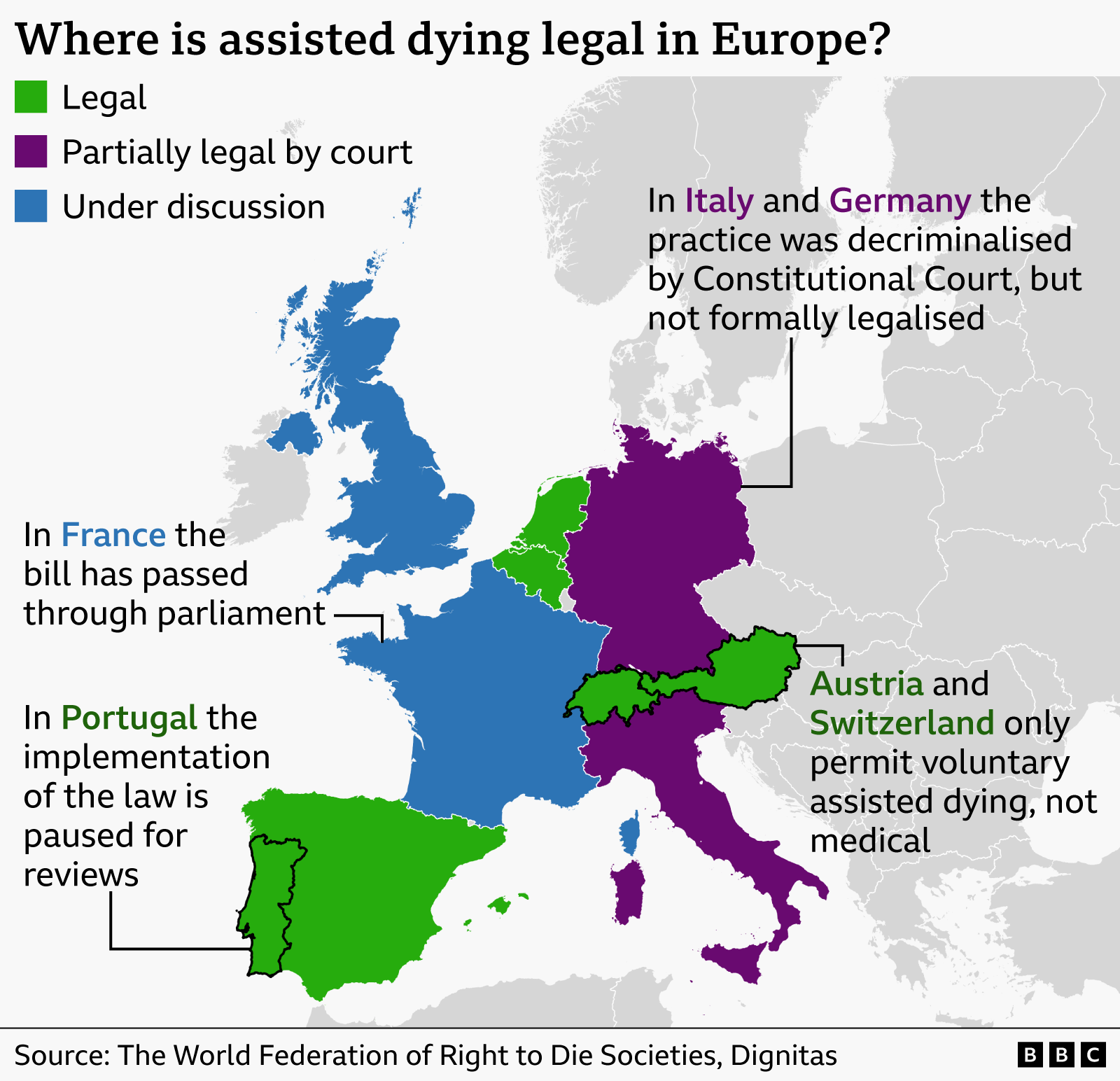
The new legislation is said to reflect the French public’s strong backing for right‑to‑die options. While the law will require strict safeguards, the policy aims to give terminally ill patients a choice between palliative care and assisted dying, potentially aligning France with its European neighbours.