
In brief
The ancient sinkholes in Guangxi province, China, offer a unique tourist experience, revealing untouched forests and ecosystems. As exploration increases, scientists and locals urge for a balance between tourism and conservation to protect these rare natural wonders.
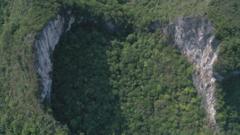
Giant sinkholes in China's Guangxi province have transformed into a captivating tourist draw, inviting thrill-seekers to explore their mysterious depths. Standing on the precipice of a limestone cliff, visitors peer down into ancient forests situated over 100 meters (328 feet) below. For centuries, these “heavenly pits,” or “tiankeng” in Mandarin, remained uncharted, shrouded in superstition as villagers feared spirits lurking in the fog. However, the ascent of modern exploration, primarily through drones and adventurous climbers, has unveiled these hidden ecosystems and driven an influx of tourism.Remarkably, two-thirds of the world’s known sinkholes are located in China, with Guangxi hosting the highest concentration. The most significant discovery occurred two years ago, where explorers found an ancient forest boasting trees that soar as high as 40 meters (130 feet). These sinkholes act as time capsules, preserving unique ecosystems that have flourished for millennia. Yet, their newfound popularity among tourists and developers raises pressing concerns about the potential harm to these fragile environments.Among those eager to experience the thrill of descending into these natural wonders is 25-year-old Rui, who stands bravely on the cliff's edge with her boyfriend, Michael. Their guide, Fei Ge, brings a wealth of knowledge from decades as an explorer, having grown up near the sinkholes. “Growing up, we were told that demons and ghosts inhabited the pits. We were terrified,” Fei recalls. Driven by curiosity, Fei ventured into the sinkholes as a child and has since helped researchers uncover the unique flora and fauna within, including previously unknown species.Deep within these caverns, the ecosystems boast plants and animals thought extinct elsewhere, alongside new discoveries like strange orchids and rare fish species. The sinkholes’ formation results from the erosion of limestone by underground rivers, creating massive voids in the earth's surface. With depths exceeding 300 meters and expansive openings, these natural formations intrigue scientists and adventurers alike, offering insights into Earth’s ancient climate.As Rui and Michael carefully rappel into the sinkhole, their thrilling descent marks the beginning of an unforgettable adventure. This type of tourism is gaining traction in China, especially after years of COVID-19 lockdowns. Tours to these sinkholes offer not only an adrenaline rush but also contribute vital funds to the local economies. Nearby Ping'e village is beginning to flourish due to the increasing flow of tourists, enhancing infrastructure and generating jobs.However, with the surge of visitors comes a necessity for cautious stewardship. Concerns arise about the impact of overdevelopment on these fragile habitats. Recent builds, including the highest viewing platform near Dashiwei sinkhole, have raised alarms among conservationists. “We must safeguard these areas, as they host many endangered plant species,” cautions Dr. Lina Shen, a leading sinkhole researcher. While tourism brings essential revenue, balancing ecological integrity with economic benefits is imperative.Recent efforts to establish regulations aim to protect these ecosystems, prohibiting access to certain sinkholes to ensure that ancient plant species remain undisturbed. Future plans may incorporate controlled viewing strategies like drone photography and designated pathways to minimize human interference while still providing a glimpse into these extraordinary sites.Brother Fei emphasizes that these sinkholes hold immense value, serving both as a source of livelihood and as natural treasures. As Rui and Michael immerse themselves in this remarkable environment, it becomes clear that their adventure reflects a larger responsibility—the need to blend the thrill of exploration with the principles of sustainability to preserve the extraordinary wonders of Guangxi's sinkholes for generations to come.



