In brief
Farmers voice distrust and misinformation as the initiative aims to immunize millions of livestock while nurturing suspicion.
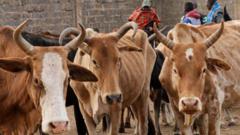
With a significant vaccination campaign set to commence this week, farmers in Kenya are voicing their strong opposition to the initiative, spurred by rampant misinformation surrounding the vaccines. The Kenyan government has committed to offering vaccines for free as it covers the costs, striving to immunize approximately 22 million cattle and 50 million goats and sheep within three years. Currently, only 10% of the national herd is vaccinated, and officials aspire to bolster this number to 85%.Amid heated reactions from the agricultural community, some farmers have expressed grave concerns regarding the vaccines. Robert Nkukuu, a cattle owner in Nakuru county, has stated that holding pro-vaccination views could lead to ostracism or worse. According to him, the controversy escalated after President William Ruto announced the vaccination program last November, inciting fear throughout the community.The motivation behind this large-scale vaccination effort, designed to combat diseases such as foot-and-mouth disease and peste des petits ruminants (PPR), has been obscured by conspiracy theories. Prominent among these is the false belief that the initiative is backed by billionaire Bill Gates, based on his past advocacy for livestock vaccination as a means to manage methane emissions. Jonathan Mueke, an official from Kenya's agriculture ministry, has publicly dispelled claims of Gates' funding, declaring that no foreign financial support exists for this program.Despite the government’s efforts to quell these rumors, misinformation continues to permeate social media, stoked by influential voices like Caleb Karuga, a farmer who has publicly rejected the vaccine in response to Gates' perceived involvement. Criticism is also coming from opposition politicians who warn that the vaccines might alter livestock genetics, though leading experts have characterized this assertion as unfounded.President Ruto defended the initiative against its critics, labeling their arguments as misguided while emphasizing the importance of vaccines in controlling livestock diseases. Analysts suggest that widespread distrust in government, intensified by previous fiscal controversies and corruption allegations, is fueling resistance to the vaccination plan.Tensions within the farming community have surfaced, with some denying vaccinations out of concerns for safety and possible ulterior motives from foreign interests. Farmers such as David Tiriki insist that they will not permit vaccination of their animals due to fears of hidden agendas, while others, like Ngemu Musau, argue for increased transparency and community engagement to alleviate fears about vaccine effects.The Kenya Veterinary Association has urged the government to pause the vaccination campaign and prioritize public education, highlighting the adverse impact of politicizing health initiatives. Nevertheless, government officials maintain that the need for immediate preventative measures, amplified by recent outbreaks of foot-and-mouth disease, cannot be postponed. As the impending vaccination drive looms, many farmers are torn, caught between the benefits of healthier livestock and the prevailing climate of fear driven by misinformation.