In brief
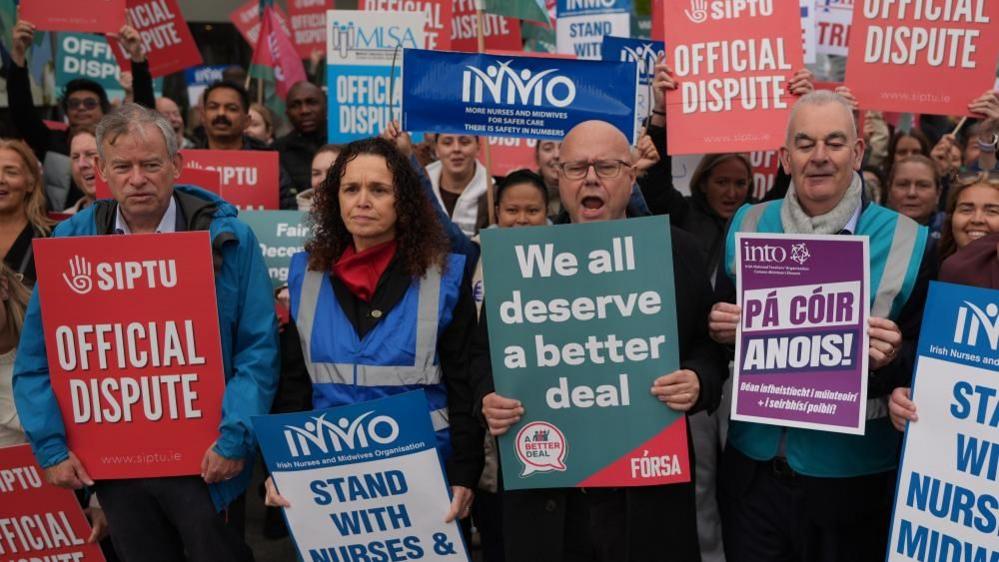
On Saturday, more than 300,000 nurses, doctors, teachers and civil servants walked off the job in the Republic of Ireland, demanding better pay. The strike, lasting 24 hours, will likely shut schools, cancel hospital appointments and create massive picket lines across the country. The action follows a failed negotiation round between unions and the government, with a second strike scheduled for 21 October. Union leaders say the government’s lack of formal talks forced the collective decision, while minister Jack Chambers labeled it deeply disappointing. Parents, students and healthcare workers now face uncertainty as the labour dispute escalates.
More than 300,000 workers, including nurses, doctors, teachers and civil servants, are on strike across the Republic of Ireland. The action comes amid an ongoing pay dispute between public sector workers and the Irish government, with a further strike planned on 21 October.
It is expected schools could be closed, with hospital appointments cancelled and picket lines formed across the country during the 24‑hour strike.
At the end of September, more than 100,000 workers, including nurses, school staff and civil servants, moved to work‑to‑rule measures. At the start of October, primary and secondary school teachers in the Republic began work‑to‑rule action.
Previously almost 97% of Fórsa members, who voted in an industrial ballot, did so in favour of action. It is the Republic’s biggest public service union.
Brendan O’Brien, divisional organiser of SIPTU, said the “goodwill” of workers was a large part of what kept public services going. He added that the Irish government’s failure to establish a basis for formal talks left members with no alternative but to act collectively.
On Tuesday, Jack Chambers, the Republic’s minister for expenditure, described the strike action as “deeply disappointing” and warned it would cause significant disruption to the economy, with thousands of hospital appointments set to be cancelled and schools closed.
Dawn Hutchings‑Walsh, a teacher at Hartstown Community School in Dublin, told Irish broadcaster RTÉ that the “pay just isn’t stretching the way that it used to”. Her colleague Sinéad McCarthy said she had to take a career break and move to Dubai for a couple of years to save money for a deposit. “It’s just not feasible in Ireland to be able to save for a house considering the circumstances and the money that we are on here in this country,” she added.
Linda Kelly, the general secretary of the Association of Secondary Teachers Ireland (ASTI), said teachers are “really struggling in terms of their pay”. She added that teachers “don’t feel like the government is taking them seriously” and that there has been a “laissez‑faire approach from government over the last couple of months”. There has been ample time to solve this issue, she told RTÉ, but the government has “sat on its hands” and the result is now a nationwide strike.