
In brief
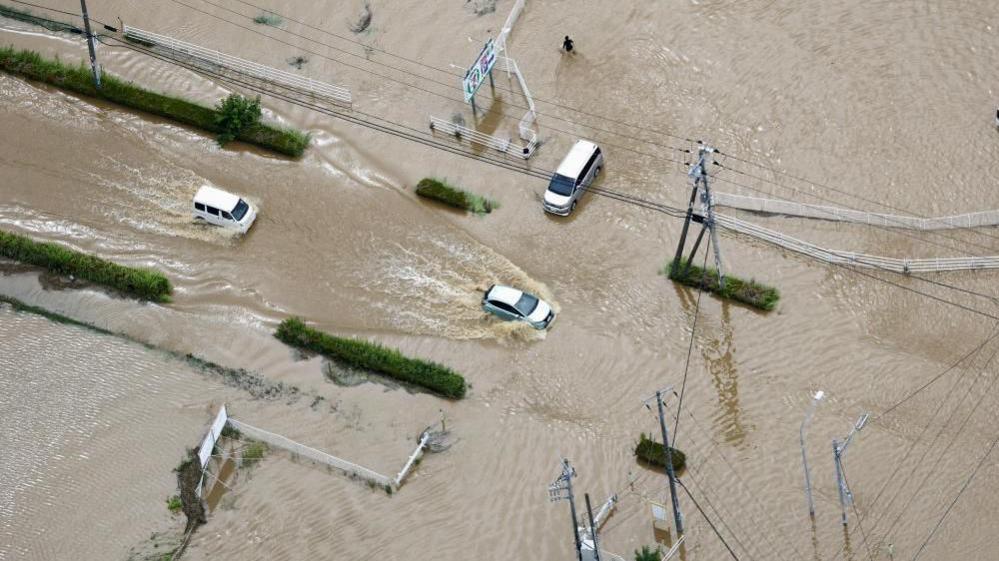
The worst rains in Japan’s history swept through Chiba prefecture, rupturing infrastructure, knocking out power for more than 20,000 homes and claiming eight lives. Authorities warned of landslides and flooding, while the storm left thousands of travelers stranded at Narita International Airport. The Japan Meteorological Agency cited extreme atmospheric instability tied to a clash of warm, humid air and colder upper‑level dynamics. The emergency alarm remains in force, with continued concern over further landslides and flooding. The event follows a string of typhoon‑like storms that also hit the Philippines and China this week.
Unprecedented rains sweep across eastern Japan
On Thursday afternoon, Chiba prefecture recorded over 100 mm of rain per hour, the heaviest in the nation’s history, triggering landslides and flooding that cut power to more than 20,000 households.
At least eight people have died, including a woman trapped in a flooded vehicle and two others who collapsed on the streets. The Japan Meteorological Agency describes the event as a “unprecedented level of heavy rain” caused by a clash of warm, humid southerly air and colder upper‑level conditions.
Airport disruptions put passengers in limbo
Thousands of travelers found themselves stranded overnight at Narita International Airport as rail services were suspended and highway closures halted traffic to and from the airport.
While Japan Airlines expects no cancellations, a small number of flights were delayed. About 1,800 people remained overnight at the Chiba Prefectural Government building, and passengers were held in metro stations.
Regional impacts and broader typhoon season
Earlier this week, Japan, the Philippines, and China were hit by a string of storms—Dolphin, Chan‑Hom, and Peilou—bringing heavy rain, power outages, and flight cancellations.
China evacuated more than a million residents as the strongest typhoon to hit the country so far this year caused widespread damage.
The emergency warning issued at the highest level on Thursday remains in force, with authorities continuing to warn of landslide and flood risks even after the downgrade to level four.

