
In brief
Ishiba's approach mitigates fears of tariffs and strengthens economic ties, showcasing a potential golden era in Japan-US relations.
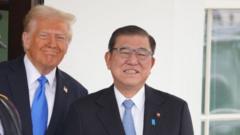
Japanese Prime Minister Shigeru Ishiba's recent meeting with President Donald Trump at the White House has offered Japan significant reassurances regarding its status as the United States' key ally in the volatile Asia-Pacific region. Unlike previous encounters marked by controversy, this meeting facilitated a cordial exchange that quelled apprehensions in Tokyo over possible punitive tariffs targeting Japanese industries.“I was concerned about how he might react,” Ishiba remarked after the meeting, which depicted Trump as “sincere and powerful,” contrasting sharply with his often intimidating public persona.The relationship between Japan and the US is pivotal, underscored by Japan’s position as the largest foreign investor in the US for the past five years, contributing to job creation and economic stability. However, lingering fears persisted about Trump’s impulsive trade policies that have previously unsettled allies.Ahead of the discussions, Ishiba engaged in diligent preparation, conducting "study sessions" with his team and consulting with former Prime Minister Fumio Kishida and the widow of the late Shinzo Abe, a leader who shared a robust rapport with Trump.This groundwork paid dividends. Despite a slip-up where Trump mixed up Nippon Steel with Nissan, the meeting largely avoided contentious issues. The two leaders discussed enhancing trade and defense cooperation, heralding a period that Ishiba characterized as a potential "golden era" for Japan-US relations. Ishiba announced ambitious plans for Japan to invest $1 trillion in the US while expressing intentions to import US liquefied natural gas (LNG), much to Trump’s satisfaction.Both leaders also reached a consensus regarding Nippon Steel’s investment plans, sidestepping previous security concerns raised by Biden's administration regarding potential acquisitions.Ishiba’s visit was particularly crucial for solidifying his political standing amid challenges at home, where his government’s recent electoral loss left it in a precarious position. Critics had speculated whether Ishiba could effectively engage with Trump, but his approach—prioritizing simple communication and flattering his counterpart—yielded favorable results.Paramount to Ishiba’s strategy was avoiding direct confrontation on contentious topics. While Japan maintains its support of a two-state solution in the Gaza situation, it remains vigilant to avoid a deeper entanglement in US-China trade conflicts, balancing its stakes as Beijing remains its chief trading partner.With China’s assertive posturing in the region and rising security threats from North Korea, Japan’s commitment to defense spending and strengthening its military under a pacifist constitution demonstrates its readiness to support US-led initiatives without challenging Trump overtly.In essence, Japan aims to sustain its identity as America’s most dependable ally, adopting a ‘yes’ strategy to strengthen partnerships while navigating the complexities of regional geopolitics.
