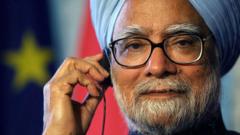
Singh, who held the highest offices as the governor of India's central bank and finance minister before serving two terms as prime minister, was not your typical politician. Endowed with an understated manner, he was easily overshadowed by contemporaries known for their fiery rhetoric and boisterous personas. However, it was his commitment to reform and transparency that garnered respect across party lines, even as opponents branded him a "puppet” of the Nehru-Gandhi family.
His tenure witnessed remarkable economic growth propelled by pro-market reforms, decisively opening the nation’s economy. Singh’s cautious approach earned him a reputation for integrity—his peers vouching that he could do no wrong. Yet, his reluctance to engage in political theatrics drew both admiration and scorn, especially during critical phases of his leadership marred by corruption scandals.
Despite these challenges, Singh remained a paragon of calm and rationale, earning respect for a public apology regarding the 1984 Sikh riots—a bold gesture unseen from previous leaders. His advocacy for peace with Pakistan also stood as a testament to his hope for improved relations, though not without backlash following the tragic 2008 Mumbai attacks.
As economic troubles and rising public discontent marked his second term, Singh's once-celebrated style began to draw criticism. The anti-corruption movement ignited a fierce backlash, shaking his government and provoking an outcry over his handling of major incidents, including a high-profile gang rape case that tarnished his image.
Ultimately, he chose not to seek a third term, expressing a belief that history would eventually vindicate his administration. Though he faced challenges that dulled his legacy at the polls, Singh’s compassionate vision for the economy, policies focused on the middle class, and dedication to integrity endure in the collective memory of India.
This quiet leader—an architect of economic liberalisation and devout public servant—leaves a complicated yet impactful legacy, reminding the nation of the strength inherent in humility and the vital importance of unyielding moral fortitude in the seat of power.
His tenure witnessed remarkable economic growth propelled by pro-market reforms, decisively opening the nation’s economy. Singh’s cautious approach earned him a reputation for integrity—his peers vouching that he could do no wrong. Yet, his reluctance to engage in political theatrics drew both admiration and scorn, especially during critical phases of his leadership marred by corruption scandals.
Despite these challenges, Singh remained a paragon of calm and rationale, earning respect for a public apology regarding the 1984 Sikh riots—a bold gesture unseen from previous leaders. His advocacy for peace with Pakistan also stood as a testament to his hope for improved relations, though not without backlash following the tragic 2008 Mumbai attacks.
As economic troubles and rising public discontent marked his second term, Singh's once-celebrated style began to draw criticism. The anti-corruption movement ignited a fierce backlash, shaking his government and provoking an outcry over his handling of major incidents, including a high-profile gang rape case that tarnished his image.
Ultimately, he chose not to seek a third term, expressing a belief that history would eventually vindicate his administration. Though he faced challenges that dulled his legacy at the polls, Singh’s compassionate vision for the economy, policies focused on the middle class, and dedication to integrity endure in the collective memory of India.
This quiet leader—an architect of economic liberalisation and devout public servant—leaves a complicated yet impactful legacy, reminding the nation of the strength inherent in humility and the vital importance of unyielding moral fortitude in the seat of power.