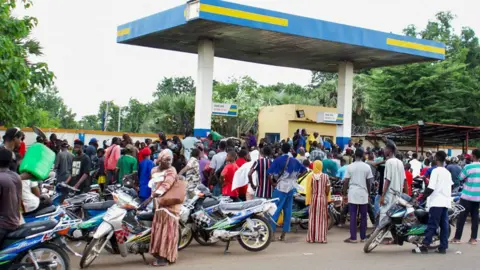
Long queues have been snaking around petrol stations in Mali's capital a month after militants from an al-Qaeda affiliate imposed a fuel blockade by attacking tankers on major highways.
Our business is at a standstill, one motorbike taxi driver told the BBC, as many others pushed their vehicles to join the petrol lines amidst chaotic scenes in Bamako.
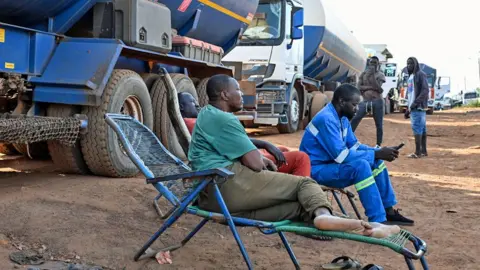
Some of the garages forced to shut last week, paralysing the city, have now reopened after more than 300 petrol tankers arrived under army escort from Ivory Coast on Tuesday.
The military government has assured residents it is only a temporary issue, but there are fears the new stock will quickly run out, as others complain about price hikes.
Other cities and areas have also been suffering from such shortages, power cuts, and fuel inflation for several weeks. My business is dying, a vendor in the central town of Mopti told the AFP news agency about her problems keeping fish refrigerated.
Mali is landlocked, so all fuel supplies are brought into the country by road from neighbours such as Senegal and Ivory Coast.
The junta had popular support when it seized power five years ago, promising to deal with the long-running security crisis prompted by a separatist rebellion in the north, which was then hijacked by Islamist militants.
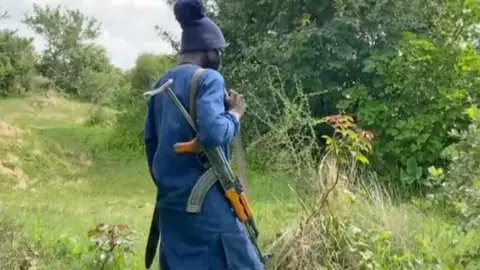
The jihadist insurgency has continued and made much of the north and east of the country ungovernable. The latest blockade by al-Qaeda linked Jama'at Nusrat al-Islam wal-Muslimin (JNIM) has involved ambushing lorries, some set alight, and kidnapping drivers, indicating an expansion of its insurgency.
Images widely shared on social media highlight the long lines at petrol stations, with people waiting for hours. One rider shared his experience of pushing his motorcycle from Djikoroni to Badalabougou, a distance of nearly six miles without fuel.
As prices in parts of Bamako have increased by more than 200%, the Prime Minister convened a crisis meeting to develop an action plan ensuring adherence to state-capped prices at garages. Officials have reassured citizens that the situation will improve in the coming days.
However, persistent power cuts are exacerbating the crisis, reducing energy supplies to just six hours a day in some areas. Reports indicate discreet negotiations are underway between Malian officials and the militants to lift the blockade, with demands possibly including a relaxation of sales restrictions on fuel.