In brief
A Nigerian court has ordered the British government to compensate the families of 21 coal miners, who were killed in 1949 by colonial police while protesting for improved labor conditions. The court deemed the killings as unlawful and a violation of the right to life. This ruling is seen as a significant step towards historical accountability and justice for colonial-era violations.
A Nigerian court has ordered the British government to pay $27 million (£20 million) to each of the families of 21 coal miners killed in 1949 by the colonial administration in southeastern Nigeria.
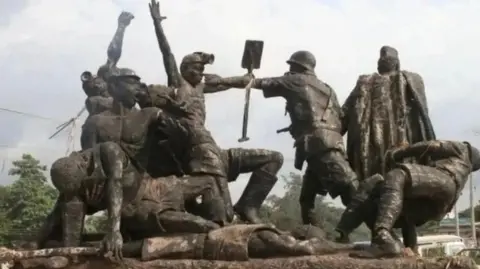
The colonial police, a mix of Nigerians and Europeans, opened fire on workers striking for better conditions. The incident is described by Nigeria's state-run News Agency as one of the most notorious acts of repression under British rule in Nigeria.
Historians note that the killing boosted support for the growing anti-colonial movement, leading up to Nigeria's independence in 1960.
The UK government stated it had not been formally informed of the judgment and could not comment.
In court, Justice Anthony Onovo described the massacre as unlawful and a violation of the right to life, emphasizing that the British government must be held accountable for the extrajudicial killings.
These defenseless coal miners were asking for improved work conditions, they were not embarking on any violent action against the authorities, yet they were shot and killed, Justice Onovo stated.
The miners were protesting against harsh working conditions and unpaid back wages when they were attacked. The suit, brought forward by human rights activist Mazi Greg Onoh, also named the Nigerian government in the proceedings.
The ruling marks a milestone for historical accountability and affirms that the right to life transcends time and borders, according to the applicants' lawyer, Prof. Yemi Akinseye-George. The Iva Valley incident occurred on November 18, 1949, and serves as a key reference point for independence activism in Nigeria.
According to a historical perspective offered by Damola Adebowale, the massacre highlighted the urgent need for change, as calls for independence were already emerging.
In the aftermath, while police claimed they feared being overwhelmed during the protest, inquiries pointed to colonial authorities for escalating tensions, solidifying the miners' status as heroes in the region's history.