
In brief
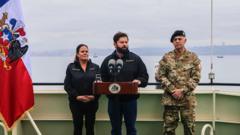
Chilean President Gabriel Boric has made history by becoming the first leader from the Americas to visit the South Pole, making a significant mark on international relations and scientific collaboration in the region.
Chilean President Gabriel Boric has made history by becoming the first leader from the Americas to visit the South Pole. His arrival at the Amundsen-Scott South Pole Station underscores Chile's continuing claims of sovereignty over portions of Antarctica. During his visit, Boric affirmed, "This is a milestone for us," emphasizing that it is the first time a Chilean president has undertaken such a journey to discuss the nation’s Antarctic mission.Accompanying President Boric on this momentous trip were a number of scientists and key cabinet ministers, including those from the armed forces and the environment sector. The purpose of this visit was not only to commemorate Chile's historic ties to the Antarctic region but also to spotlight the country’s commitment to advancing scientific research, particularly regarding climate change. In a government statement, Boric's administration indicated that a coalition involving research centers, universities, diplomats, and the military is now working to establish Chile as a principal gateway to Antarctica.Taking office in 2021, Boric is noted for being the youngest president in Chile's history at just 35 years old. Previously, only two world leaders—New Zealand's and Norway's prime ministers—had ventured to the South Pole before him. Claims to parts of Antarctica involve several nations, including Chile, the UK, France, and others, with the continent serving primarily as a space for scientific research due to its unique status without a governing body or indigenous inhabitants.The Antarctic Treaty, effective since 1961, promotes a model of cooperative intellectual exchange among countries. The Amundsen-Scott South Pole Station itself honors both Norwegian explorer Roald Amundsen, who first reached the South Pole, and British explorer Robert Scott, who unfortunately perished during his return due to a blizzard.Boric's historic visit not only highlights Chile's strategic interests in Antarctica but also reinforces the global imperative for continued scientific collaboration in understanding climate change and preserving the fragile ecology of the region.
