
In brief
At the Australian Reptile Park, dedicated professionals milk venom from the country's most dangerous creatures, including the notorious Sydney funnel-web spider and King Brown snake, to produce antivenom that has drastically reduced fatalities from bites, transforming a lethal menace into a potential lifesaver.
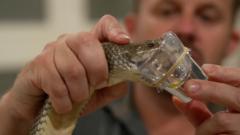
The poison paradox: How Australia's deadliest animals save lives With a pair of bright pink tweezers in hand, Emma Teni is carefully extracting venom from a large, fearsome spider in a small container. "He’s posing," she jokes, while the arachnid rears up, fully aware of the danger it represents. This scene unfolds in a specialized room at the Australian Reptile Park, where Ms. Teni milks venom from around 80 Sydney funnel-web spiders each day—a crucial effort in the government’s antivenom program aimed at combating the threats posed by Australia’s infamous wildlife.Sydney funnel-webs are among the most venomous spiders globally, having the capacity to cause death within minutes if untreated. However, thanks to the ongoing antivenom program initiated in 1981, no fatalities have occurred due to funnel-web bites since its inception. The program invites local residents to safely capture and deliver the spiders to the park instead of exterminating them, creating an unexpected synergy between the very creatures that instill fear and the life-saving solutions they provide.Handyman Charlie Simpson can relate. After spotting multiple funnel-webs around his new home, he decided to deliver one to a local vet. Equipped with gloves, he admitted he might need sturdier protection for such dangerous specimens, yet he realizes participation in the antivenom effort is far more crucial than personal fear. "Catching one has helped me confront my fears of spiders," he quipped.Emma Teni emphasizes the importance of public cooperation in their mission, explaining that the spiders—often perceived as a threat—actually play a vital role in saving lives. Each collected specimen is transported back to the park, classified, and used for their unique contributions to the antivenom manufacturing process. Males, notably more toxic than their female counterparts, are milled for venom bi-weekly, while females are considered for breeding to support the growing population necessary for antivenom production.The process doesn't stop here. Australian Reptile Park is also a critical supplier of snake venom for antivenom generation, contributing to the success of treatment programs that have drastically lowered fatality rates from snake bites—a harrowing reality elsewhere. Antivenom derived from King Brown snakes, Taipans, and other species is freeze-dried and sent to laboratories where it undergoes extensive processes to be transformed into safe, effective antidotes.Dr. Jules Bayliss, leading the antivenom development team at CSL Seqirus, indicates that their program not only aims to cover Australia’s diverse needs but also extends to Papua New Guinea where snake bite rates are alarmingly high. He noted the immense responsibility and essential task of making such vital medicines accessible, particularly in remote regions where bites occur.Despite the pervasive mythology surrounding venomous snakes and spiders, experts agree that caution rather than fear is key to coexistence. As Mr. Collett, an operations manager at the park, jested, "If you're going to get bitten by a snake, you’d want to be in Australia—with the best antivenom and treatment available." In the end, the deadly creatures of the continent which once elicited terror have emerged through robust medical protocols to offer life-saving solutions, highlighting the paradox of fear and hope entwined within Australia’s natural landscapes.

