
In brief
Since the start of the year Russia has pumped 1.56 trillion roubles – the largest spike outside the COVID era – into cash circulation. Mobile‑internet shutdowns and a 22 % VAT hike have made card‑payments harder and compelled small businesses to keep money off‑books. Cash‑dependence erodes the state’s ability to collect taxes, widening the budget deficit at a time when the war in Ukraine demands every rouble. The shift underscores a growing appetite for control in an uncertain environment and a return to Soviet‑era habits of hiding money at home.
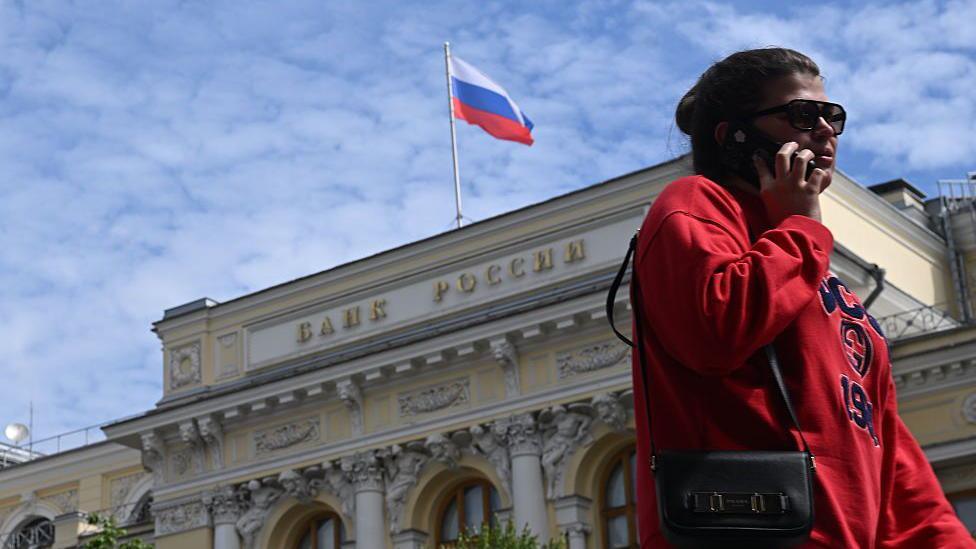
After Ukraine’s drone attacks have repeatedly forced the Kremlin to shut down mobile internet across large swathes of the country, a fresh wave of cash withdrawals has sprung up, with the Central Bank reporting 1.56 trillion roubles added into circulation this year alone. According to the data, the rise is the largest for the equivalent period in any year outside the COVID‑19 pandemic.
The surge dovetails with mounting economic pressure. The government raised VAT from 20 % to 22 % in January and lowered the threshold at which small and medium‑sized enterprises (SMEs) must pay tax, sending many already struggling firms to the brink. Businesses now favour cash to keep more income off the books, especially when the bank’s high‑interest deposits – a 10 % yield on a one‑year fixed‑term does not fall short of the 12‑12 % premium anyone found before the war‑rush – lure people to keep money in hand.
“Having cash on hand gives you some sense of control and security,” said one anonymous Moscow resident. “If the mobile network goes down, I know I’ll still be able to buy basic necessities.”
The result: the state has become less efficient at collecting revenue. Former Sberbank chief financial officer Taras Skvortsov warned of "very serious signs" of businesses paying wages “in envelopes” under the table and a trickle of cash back into the economy rather than through the banking system. A recent survey by Opora Russia, the country’s largest SME association, found that roughly 6 % of entrepreneurs resorted to “grey schemes” – issuing no cash‑register receipts or avoiding payroll taxes – to cope with the new tax burden.
Historical precedent does not help. During the partial mobilisation announced in September 2022, the surge in cash withdrawals surged again, demonstrating how quickly Russians can shift from digital to cash payment when uncertainty spikes. The latest spike, now tied to mobile‑internet shutdowns around Victory Day celebrations in May, mirrors a Soviet‑era instinct for keeping money “under the mattress” even when the return on bank deposits is attractive.
While the oil and gas sector is buoyed by a rise in global oil prices following the Iran war, the broader economy is slowing: the Ministry of Economy cut the 2026 GDP forecast to just 0.4 % growth, Russia’s weakest pace since 2022. With the state footing a widening deficit, every rouble matters – but the continuing shift toward cash strangulates the tax‑collection machine it relies on for widening war costs.
Experts warn that the dual pressures of silencing mobile‑payments to thwart drone strikes and raising taxes are unbalancing each other. “One arm of the government is squeezing money out through higher taxes, fines and other charges, while another arm is undermining that strategy by making it harder to collect tax,” said Alexander Kolyandr, a senior fellow at the Center for European Policy Analysis.
That matters because every rouble withdrawn remains in people’s hands and is often lost as it passes through dot‑paying, small‑scale transactions that never reach the state. The phenomenon is mirrored in storages of cash in cities such as Pskov, where clothing shops have begun to close and ask customers to pay in cash “whenever they can” to avoid turning over money through a register.
With the war stretching on and economic fundamentals weakening, the Russian government’s fiscal reliability is at a critical juncture. The shift back to cash and the iron‑hearted boot‑on‑the‑neck that block access to the banking system misaligns the objectives of tax collection and security restraint, two inseparable pillars of Russia’s war economy.


