In brief
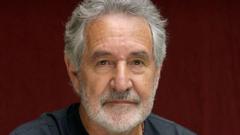
Breyten Breytenbach, an influential figure in the fight against apartheid, has died aged 85, leaving behind a powerful legacy as a poet, novelist, and artist committed to social justice.
Breyten Breytenbach, the celebrated anti-apartheid writer and activist, has passed away at the age of 85. His family confirmed that he died peacefully in his sleep in Paris, with his wife, Yolande, beside him. Known for his fierce opposition to the apartheid regime in South Africa, Breytenbach's literary prowess and activism made him an iconic figure in the struggle for human rights.Breytenbach gained recognition for his sharp intellect and talent as a poet, novelist, and painter, earning the admiration of many, including the British satirical show "Spitting Image," which affectionately dubbed him "the only nice South African" during a time of widespread oppression. Former French education minister Jack Lang paid tribute to him on social media, calling him "a rebel with a tender heart" and highlighting his lifelong commitment to human rights.Born on September 16, 1939, in the Western Cape, South Africa, Breytenbach was a member of a family of five and began his education at the University of Cape Town. He joined the Sestigers, a collective of Afrikaans poets and writers who sought to challenge the apartheid government's use of their language while celebrating its beauty. Although he loved Afrikaans as a language, he distanced himself from the Afrikaner identity, stating, “I reject it as part of the Afrikaner political identity.”In 1960, Breytenbach entered a period of self-imposed exile, primarily in Europe. Despite living abroad, he remained a vocal critic of the apartheid regime. He returned clandestinely to South Africa in 1975, where he was arrested while attempting to support resistance movements. Breytenbach was sentenced to seven years in prison for terrorism, enduring two years of solitary confinement. His release in 1982 was aided by then-French President François Mitterrand, and he later became a French citizen.His time in prison inspired one of his most significant works, "The True Confessions of an Albino Terrorist," which chronicles his harrowing experiences as a political prisoner. After apartheid's downfall, Breytenbach continued to voice his discontent, criticizing the African National Congress (ANC) for what he viewed as its descent into corruption.Breytenbach's activism extended beyond South Africa. In 2002, he wrote an open letter published in The Guardian, addressing Israeli Prime Minister Ariel Sharon regarding the ongoing Israeli-Palestinian conflict, asserting that a viable state should not emerge from oppression.With a prolific legacy, Breytenbach authored over 50 books, many of which have been translated into various languages, and is celebrated for his evocative surreal paintings. His contributions to the arts were recognized when he was knighted as a member of the Order of Arts and Letters in France.He is survived by his wife Yolande, their daughter Daphnée, and two grandsons, leaving behind a rich legacy of art and activism that echoes the ongoing struggles for justice and equality worldwide.