
In brief
Hadi Matar, who brutally stabbed Salman Rushdie in 2025, received a federal conviction for providing material support to the Lebanese militant group Hezbollah. Prosecutors tied the crime to a 1989 fatwa that ordered the author’s death and claimed Matar was driven by a call to enforce it. The 28‑year‑old, already serving a 25‑year sentence for attempted murder, now faces the possibility of life in prison. Rushdie testified about his wounds, explaining how the attacker’s knife nearly reached his brain and left him partially blind. The verdict underscores the continuing danger of religiously motivated terrorism.
Hadi Matar, a U.S. citizen who stabbed British‑Indian author Sir Salman Rushdie 15 times in 2025, has been convicted in a New York federal court of providing material support to Hezbollah, a designated terrorist organization. The judge noted that Matar’s actions were motivated by a 1989 Iranian fatwa that called for the author’s death.
While in state court, Matar had already been sentenced to 25 years behind bars for the attempted murder. Prosecutors argued that the attacker had plotted the stabbing for two years, driven by a 2006 Hezbollah sermon that urged enforcement of the fatwa. The jury found that Matar’s conduct constituted transnational terrorism.
Rushdie took the witness stand, describing the knife’s proximity to his brain, the large wound in his eye that left him partially blind, and the life‑saving medical care from a bystander firefighter. He also confronted Matar’s motivations, stating that the brutal act was not his own, but someone else’s call.
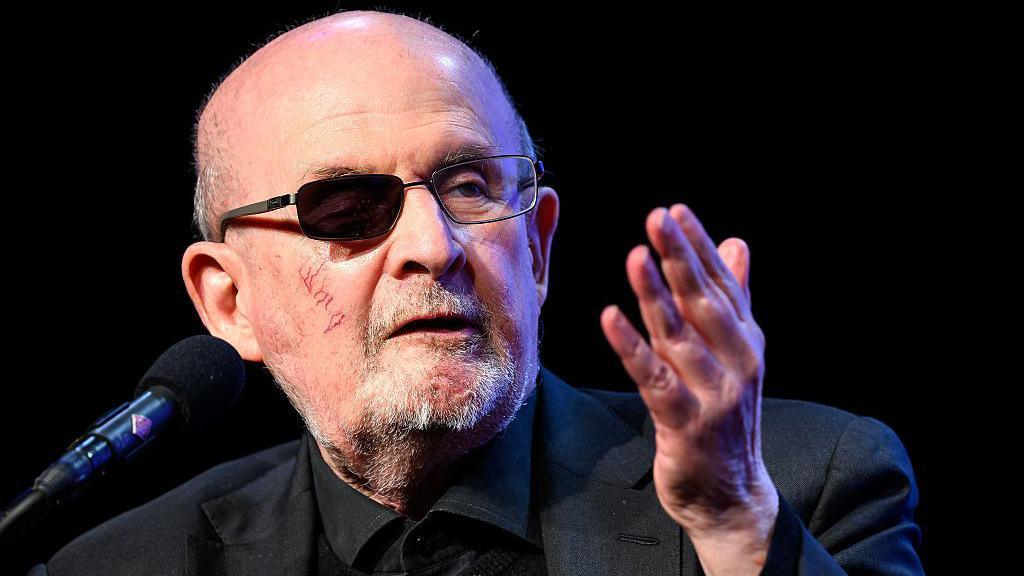
Matar now faces a potential life sentence under federal corruption laws. Below is a photo from the 2025 incident.
The case highlights the persistent influence of religious edicts on violent acts and the far‑reach of international penal systems. As the United States seeks to adjudicate foreign‑world terrorism, the outcome for Matar underscores the legal avenues available for domestic authorities when transnational threats are involved.
