In brief
In the fishing villages of Sherbo Island, Sierra Leone, local fishermen report a dramatic decline in catches, blaming illegal Chinese trawlers for stealing nets and violating a 7‑mile maritime exclusion zone. A recent global report attributes 40 % of the world’s unlicensed fishing to West African waters, costing the region $10 billion in lost revenue. Village leaders and national union president Thomas Turay credit rampant corruption and lack of enforcement for the crisis, while the Ministry of Fisheries dismisses the claims and cites new transponder requirements. Environmental Justice Foundation’s Steve Trent argues for tighter tracking and consumer pressure on China, whose international fishing fleets grow by the thousands each year.
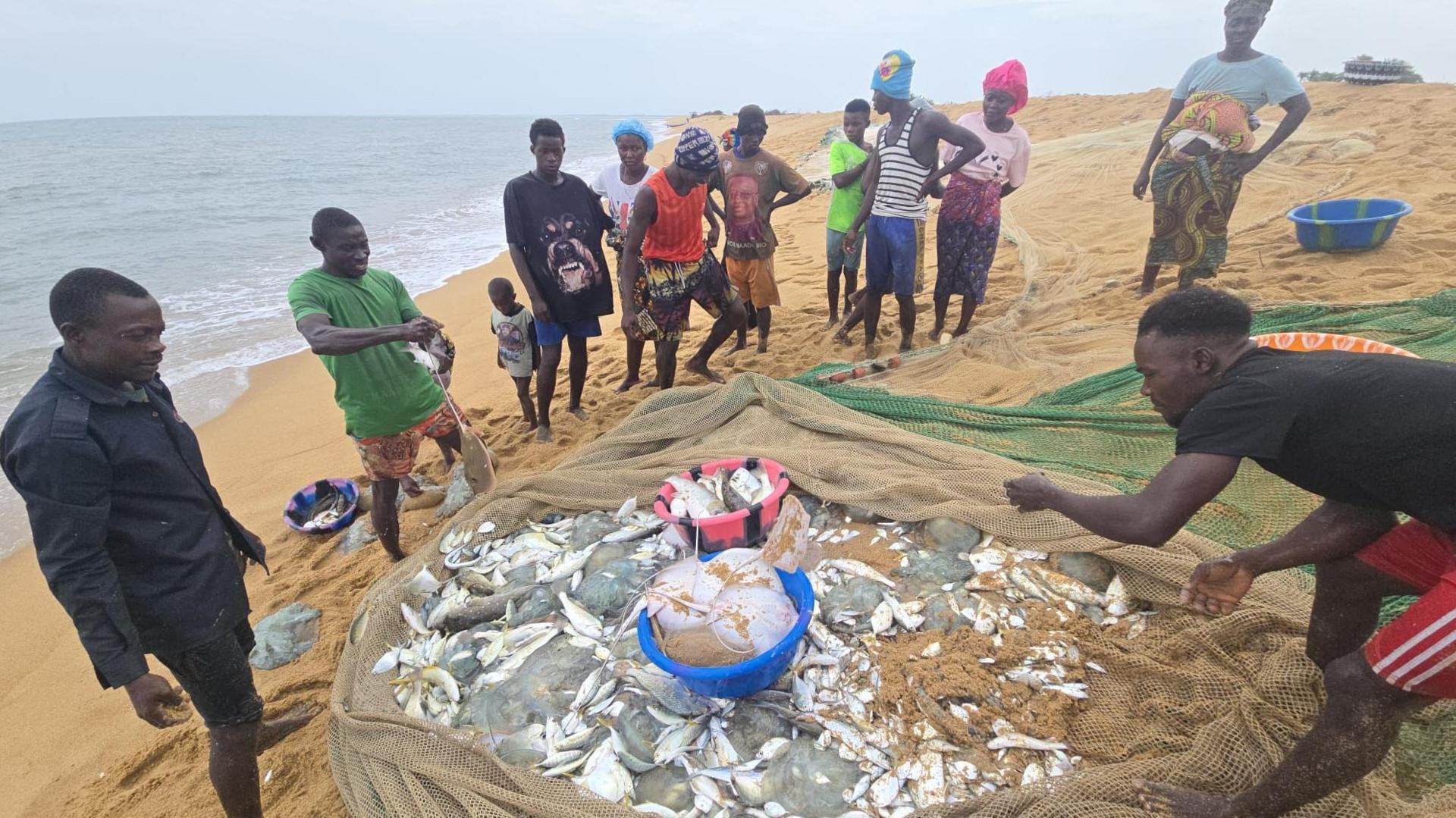
On the remote Sherbo Island, about 120 km south of Freetown, fishermen gather every dawn to haul in nets filled with snapper, mackerel and other sea life. Over recent years the catch has dropped sharply – estimates from the fishermen’s union suggest a 40 % decline – and the blame has fallen squarely on large foreign trawlers, mainly Chinese vessels that pierce the 7‑mile exclusion zone every night.
“The trawlers cut our nets and steal our catch,” says local fisherman Musa Gassimo, whose nets were damaged repeatedly during a recent sweep. He notes the cost of new nets, which can range up to $250 (£189), and the fact that Chinese vessels routinely anchor just outside the forbidden zone.
Thomas Turay, president of Sierra Leone’s Fishermen’s Union, says the problem is “too much.” He laments a lack of government enforcement and corruption that shields the trawler operators from accountability.
A 2024 global analysis of illegal fishing indicates that West African waters are the world’s epicentre, with up to 40 % of unlicensed catches traced to the region and an estimated $10 bn loss in revenue for local economies.
The Sierra Leone Ministry of Fisheries counters this narrative, noting that all international vessels now carry transponders that monitor movements and that the 7‑mile exclusion zone is backed by stiff penalties. Minister Sheku Sei insists that the penalties have not been applied in the last decade, but suggests recent international pressure and transponder enforcement should curb illicit activity.
Environmental Justice Foundation CEO Steve Trent calls for tighter vessel tracking and consumer pressure on Beijing. “Chinese trawlers are taking fish from West Africa’s rich coastal waters and selling it worldwide,” he argues, urging consumers to choose ethically sourced seafood. The trawler industry, he warns, relies on subsidies and weak oversight that allow satellite systems to be deactivated to avoid sanctions.
China’s foreign ministry has denied all accusations of illegal fishing in the region, asserting that China enforces international law and cooperates with partner nations.