In brief
The Colorado Supreme Court rejected a habeas corpus petition aimed at freeing five elephants from Cheyenne Mountain Zoo, concluding that elephants are not considered persons under the law, thus denying them liberty rights.
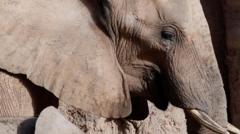
In a significant legal decision, a Colorado court has ruled against an animal rights group's petition to transfer five elephants from the Cheyenne Mountain Zoo to a sanctuary, stating unequivocally that elephants are not human and therefore lack the same rights as people. The animal rights group, Nonhuman Rights Project (NRP), filed a habeas corpus claim asserting that the elephants—Missy, Kimba, Lucky, LouLou, and Jambo—were living in conditions akin to imprisonment and deserved the right to freedom based on their cognitive and emotional complexity.The Colorado Supreme Court unanimously ruled 6-0 in favor of an earlier district court's conclusion that the state's habeas corpus laws apply solely to human beings. Justice Maria Berkenkotter emphasized that while the elephants are indeed remarkable creatures, the legal framework does not extend personhood to animals, regardless of their level of intelligence or emotional depth. "An elephant is not a person," she stated.Furthermore, the Court affirmed that the habeas corpus process could not be invoked on behalf of nonhuman animals. In light of their ruling, Cheyenne Mountain Zoo defended its practices, claiming the elephants were well cared for. The zoo characterized the lawsuit as frivolous and expressed frustration over resources spent on the case, suggesting that the NRP was leveraging the legal system for fundraising purposes.Despite the court's decision, NRP expressed disappointment, arguing that the ruling reinforces an "injustice" against animals who experience suffering. They likened their struggle to other social justice movements, indicating that setbacks are common when challenging established norms that deny substantial rights to animals. This claim follows earlier unsuccessful attempts by the NRP to secure freedom for an elephant named Happy in New York, which also highlighted the ongoing legal debates surrounding animal rights in the United States.