
In brief
Amidst the civil war's aftermath, Syrian rebels and civilians grapple with the implications of Russia's past support as they navigate their country's uncertain future.
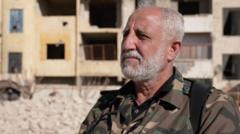
Many Syrians are calling for an end to Russia's military presence in their war-torn nation, associating the Kremlin’s involvement with widespread destruction and the support of the oppressive Assad regime. The relationship between Moscow and Damascus has historically been mutually beneficial, with Syria granting Russia access to critical military bases in return for military backing. However, following significant changes in Syria's political landscape, the interim government expresses a willingness to consider future cooperation despite the growing resentment toward Russian involvement.Ahmed Taha, a rebel commander from Douma, fiercely criticizes Russia as an enemy and holds them accountable for the devastation experienced in his city, once a thriving center. The city's transformation into ruins mirrors the larger narrative of loss and suffering that has defined Syria's decade-long civil war. Taha, who once was a civilian, took up arms against Assad's regime during the 2011 protests following brutal government crackdowns.Since intervening in Syria in 2015, Russia's military involvement has allowed Moscow to expand its influence in the region while simultaneously cementing support for Assad's faltering government. Despite Russian promises to target extremist groups, numerous human rights violations have been reported by the UN against both the Syrian regime and Russian forces. Critics argue that their presence has only exacerbated the human tragedy, with countless civilian lives lost during brutal sieges like those in Eastern Aleppo and Douma.Post-Assad, the dynamics shift as some interim leaders contemplate stronger ties with Russia, recognizing the complexity of rebuilding Syria’s military and infrastructure. Turki al-Hassan, a former Syrian army general, emphasizes the need for Russian supplies to rejuvenate the military, stemming from historical dependencies on Soviet-era arms.Russian officials appear to be adopting a cautious approach, with foreign minister Sergey Lavrov emphasizing a "strategic" relationship in recent remarks. While negotiations about the future of Russian bases in Syria unfold, the sentiment among many citizens remains clear: a desire for genuine sovereignty and hope for a reconstruction effort that does not rely on past oppressors. Humanitarian discussions are underway, yet many Syrians are skeptical of Russia's intentions, believing that Moscow is primarily driven by its interests rather than a commitment to real stabilization and reform in the region.

