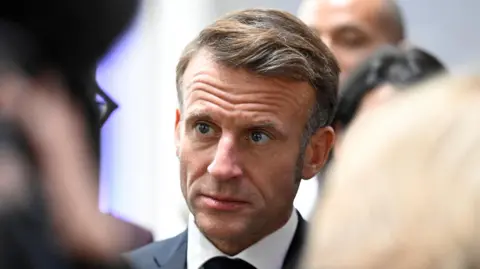
After eight years in office, Emmanuel Macron's position as president is coming under increasing pressure as France's political crisis escalates.
Macron once called himself maître des horloges - master of the clocks - but his command of timing is not what it was. For the third time in a year his choice of prime minister has resigned, and opinion polls suggest almost three-quarters of voters think the president should step down too.
Long-time ally Édouard Philippe, who served as Macron's first prime minister from 2017-20, has urged him to appoint a technocrat prime minister and call presidential elections in an orderly manner.
How did we get here?
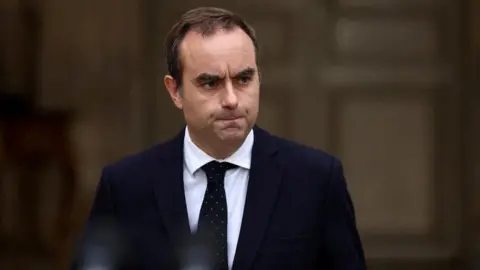
Prime Minister Sébastien Lecornu announced his resignation at the start of a day of political drama on Monday, after only 26 days in the job. Hours later he said he had accepted Macron's request to stay on for another 48 hours to hold last-ditch talks with political parties for the stability of the country.
The unexpected twists were the latest in a long series of upheavals that began with Macron's decision to call a snap parliamentary election in June 2024. The result was a hung parliament in which Macron's centrist partners lost their majority and had to seek alliances with other parties.
The leader of one of those parties, Bruno Retailleau of the conservative Republicans, pulled out of Lecornu's government 14 hours after it was announced.
It's all about France's debt
The big challenge facing Lecornu and his two predecessors has been how to tackle France's crippling national debt, which stood at €3,345 billion earlier this year, almost 114% of economic output (GDP), the third highest in the eurozone after Greece and Italy. France's budget deficit for this year is projected to hit 5.4% of GDP.
Lecornu did not even make it as far as presenting a budget plan. Criticism poured in from all sides as soon as he presented his cabinet on Sunday afternoon, and by Monday morning, he decided his position was untenable.
He blamed his departure on the unmovable stance of parties who, he said, all behave as if they had a majority.
All the parties have an eye on the next presidential votes in 2027, and they are also gearing up for the possibility of snap parliamentary elections in case Macron dissolves parliament again.
Who are the key figures in this crisis?
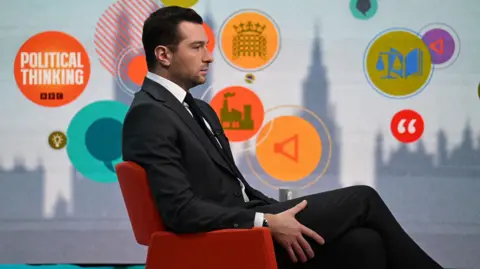
Marine Le Pen and her young lieutenant in the far-right National Rally, Jordan Bardella, are ready for elections and have refused Lecornu's invitation to talk. Jean-Luc Mélenchon of the radical left France Unbowed has been agitating for Macron's impeachment, although that seems unlikely. Olivier Faure's centre-left Socialists were allied to the radical left during the last elections but have been talking to Lecornu on condition that he forms a left-wing government.
What happens now?
Lecornu has been deep in discussions with party representatives and has until Wednesday evening to present a platform of action and stability to Macron. There are four options - and none of them look good.
If Lecornu manages to persuade the centre-ground parties to form some kind of government, then Macron will be able to name a new prime minister. If Lecornu fails, fresh parliamentary elections may be called, potentially benefiting Marine Le Pen's hard-right National Rally.
Macron's presidency ends in 18 months but he is facing increasing calls to step down. Former Macron minister Benjamin Haddad argues that his resignation would make no sense, as the next president would face the same problems: The political divide is here to stay.
A limited budget compromise could still be reached, though French politics is seldom known for its culture of compromise.
Has Macron run out of road?
Following the resignation of his third prime minister, Macron walked along the River Seine, symbolizing the solitary nature of his position. Facing some of the hardest choices of his presidency as allies abandon him, there is a growing sense that time may be running out for the master of the clocks.