
In brief
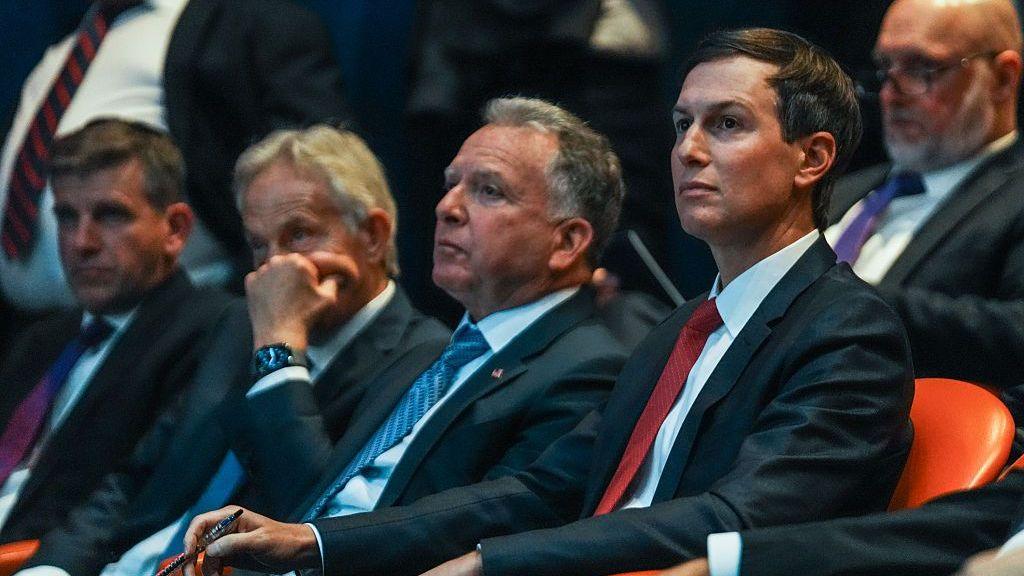
Donald Trump’s Board of Peace announced a $2.45bn Gaza reconstruction package, spread across 66 programmes over six months. The board highlighted that only $280m has been delivered so far, with $71bn required for a full decade‑long recovery. Key challenges include securing the area, untangling governance and securing consensus between Israeli and Palestinian officials. Board members – including Jared Kushner and US envoy Steve Witkoff – stressed deep commitment while calling for further donor participation.
At a meeting on the sidelines of the UN General Assembly, US President Donald Trump’s Board of Peace announced a $2.45 billion plan to address Gaza’s most urgent rebuilding need—housing, diesel power and waste removal—spread across 66 programmes over six months.
The board noted that while $18 billion has been pledged, only $280 million has been handed over. Full reconstruction, it added, will require roughly $71 billion over the next decade.
Jared Kushner, a key board member and Trump’s son‑in‑law, said the drive faces “different delays on different things, for whatever reason” but reiterated the group’s full commitment to the effort. US envoy Steve Witkoff echoed this, noting that a ceasefire and historic”donor contributions have paved the way for recovery.
The initiative must grapple with several obstacles: securing safe operating environments, restructuring internal governance, and reaching agreement with both Israeli and Palestinian authorities. Board members Alan Eisenberg and others highlighted the need to clear unexploded ordnance and tunnel networks to allow normal rebuilding to begin.
The Board of Peace traces its roots to Trump’s 20‑point Gaza peace plan, announced in 2025 alongside Israeli Prime Minister Benjamin Netanyahu. That plan was built on a hostage exchange and the idea that Gaza could be run by Palestinian technocrats.
As hostilities continue, with over 1,300 Palestinians dead since the ceasefire, the board’s monetary commitment underscores a strategic shift toward long‑term stability rather than short‑term cease‑fire ceasefires. International donors are being called upon for additional support to turn the plan into reality.

