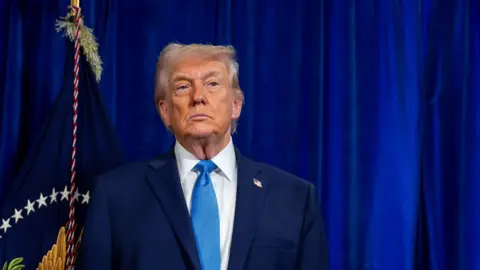
In a striking display of U.S. military might, President Donald Trump has taken control of Venezuela by incarcerating its leader, Nicolás Maduro. Announcing his plans at Mar-a-Lago, Trump emphasized that the U.S. would 'run' Venezuela until a 'safe, proper and judicious transition' could be arranged. The implications of this action are vast, suggesting a shift in U.S. foreign policy norms.
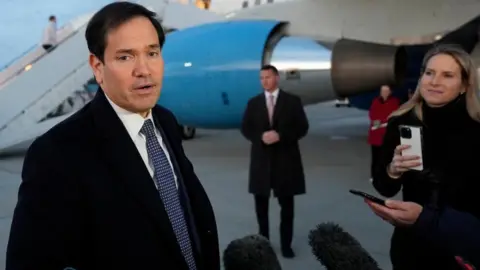
The operation, which took place without U.S. casualties, was lauded by officials like Secretary of State Marco Rubio, but its long-term consequences are contentious. While Trump celebrates regime change, experts warn of potential instability, as previous U.S. interventions in Iraq and Afghanistan demonstrate the unpredictable fallout of such actions.
Critics argue that Trump's intervention could encourage authoritarian regimes globally to exploit this precedent. A chilling concern arises: if the U.S. can justify military actions based on national interests or accusations, could countries like China and Russia do the same?
By conducting military operations under the guise of thwarting criminal conduct, Trump challenges the foundation of international law. This has led to strong disapproval from nations such as China, which condemns U.S. actions as violations of sovereignty.
The repercussions of this intervention extend far beyond Venezuela's borders, indicating a potential return to a more chaotic global landscape, where power dynamics are dictated by military strength rather than diplomatic agreements. As the dust settles from the Maduro operation, the world watches closely to see how these actions may redefine geopolitical relationships and the future of international law.
The operation, which took place without U.S. casualties, was lauded by officials like Secretary of State Marco Rubio, but its long-term consequences are contentious. While Trump celebrates regime change, experts warn of potential instability, as previous U.S. interventions in Iraq and Afghanistan demonstrate the unpredictable fallout of such actions.
Critics argue that Trump's intervention could encourage authoritarian regimes globally to exploit this precedent. A chilling concern arises: if the U.S. can justify military actions based on national interests or accusations, could countries like China and Russia do the same?
By conducting military operations under the guise of thwarting criminal conduct, Trump challenges the foundation of international law. This has led to strong disapproval from nations such as China, which condemns U.S. actions as violations of sovereignty.
The repercussions of this intervention extend far beyond Venezuela's borders, indicating a potential return to a more chaotic global landscape, where power dynamics are dictated by military strength rather than diplomatic agreements. As the dust settles from the Maduro operation, the world watches closely to see how these actions may redefine geopolitical relationships and the future of international law.