
In brief
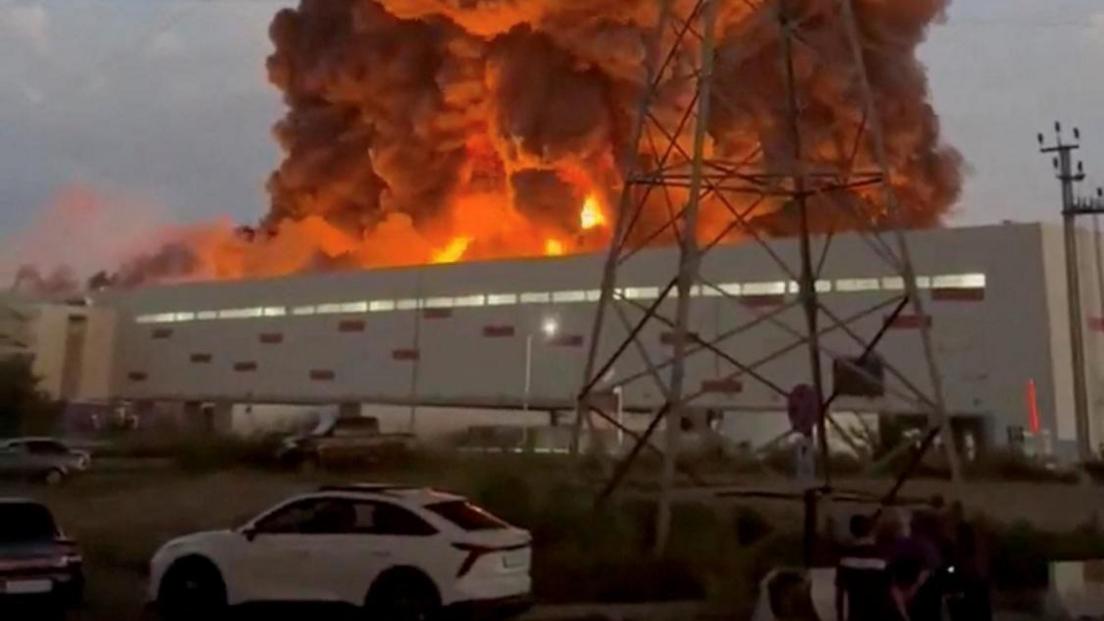
Ukrainian drones targeted several Wildberries logistics hubs over three days, leaving frontline casualties and sparking a wave of losses among Russia’s connected sellers. The assaults aimed to disrupt armaments supply chains, but they also hit the heart of Russia’s online retail economy, killing workers and destroying stock worth an estimated £750 m. As Moscow’s small‑business landscape already faces VAT hikes, sanctions and fuel shortages, the attacks further strain fragile enterprises dependent on Wildberries for distribution and sales. Long‑term resilience hinges on government support and business diversification, but compensation offers prove insufficient for many affected traders.
Ukrainian drones strike Wildberries hubs, poling Russia’s small businesses
In a blur of white and grey, Ukrainian drones slammed into four Wildberries warehouses over three days, from Elektrostal outside Moscow to Vladensko in the Stavropol region. The hits inflicted a grim death toll—seven workers perished, 36 were wounded—and blackened goods worth an estimated £750 million.
The Kremlin denies that e‑commerce platforms feed the army, yet a wide array of military‑grade equipment appears to be sold there—body armour, helicopters spare parts and even drone components. Ukrainian spokesperson Volodymyr Zelensky frames the strikes as a way of “bringing the war home,” illustrating a strategy that extend beyond the front‑line boost to include economic sabotage.
For the thousands of Russian sellers who rely on Wildberries to reach 85–90 % of the country’s active market, the attacks hit harder than a supply‑chain disruption—many traders felt their entire stock evaporate overnight. One stationery seller lost the bulk of her inventory; another teenager‑clothes retailer suffered a 1.4 million rouble loss and halted new orders for weeks. While company owner Tatiana Kim promised partial compensation, the bulk of sellers received no payout, citing a contractual “force majeure” clause added last month.
The blow mirrors a broader trend of economic wear‑and‑tear in Russia. In the first quarter of 2026, 209,000 SMEs shuttered—a 9 % jump on last year’s rate—amid inflation, a 2 % VAT hike, and a crippling fuel crisis triggered by Ukrainian strikes on oil infrastructure. The state’s declared priority of protecting small businesses has largely failed to keep pace with war‑induced destroyer such as this decade‑long conflict.
As Ukraine’s long‑range drone campaign continues to disrupt not only military logistics but also commercial supply routes, the Russian market’s capacity to recover hinges on the resilience of its digital economy and the speed of governmental protective measures. For now, the Wildberries strikes have added yet another “nail” to the economic coffin of Russia’s small‑business sector.

