
In brief
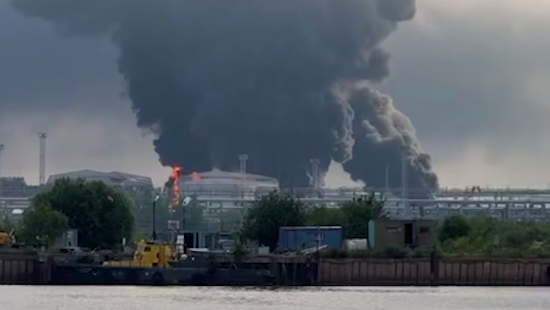
Ukraine’s forces deployed drones that struck a major oil terminal in St. Petersburg, a plant capable of producing 12.5 million tonnes of petroleum annually, the biggest in Russia. The strike, confirmed by St. Petersburg Governor Aleksandr Beglov, caused no casualties but unleashed extensive smoke and fire. Ukrainian President Volodymyr Zelensky noted the blow to Russia’s war‑time revenue, while Moscow has yet to comment. The attack is part of a wider strategy that has already strained fuel supplies across the north‑west, threatening both military logistics and civilian markets.
Ukraine’s military announced a drone strike on a major oil terminal in Russia’s second city, St. Petersburg, underscoring a new phase of strategic targeting aimed at crippling Russia’s war‑fighting revenue stream.
The terminal, headquartered near the Baltic coast, is reportedly the largest oil processing facility in Russia, capable of producing 12.5 million tonnes of petroleum products each year. The drone, however, caused no recorded casualties but set off a large plume of black smoke and widespread fire across the complex.
State‑controlled media reported that A. Beglov, the governor of St. Petersburg, confirmed a “massive” drone assault and admitted the terminal was hit, adding that 72 Ukrainian drones were downed over the city and surrounding Leningrad region.
The incident is part of a broader pattern of Ukraine’s long‑range drone attacks on Russian energy infrastructure, a campaign that has already created fuel shortages across several regions, forcing disruptions to both passenger and military logistics.
President Zelensky’s brief statement on social media highlighted the tactical significance of the strike, noting it specifically targeted “port oil infrastructure that generates revenue for Russia’s war.” He also referenced a simultaneous hit on an important military target in Kronstadt, a key naval base for the Russian Baltic Fleet.
No official Russian statement has appeared to reply to the attack, leaving the precise impact on production volumes uncertain. Ukrainian officials also dismissed recent claims that the eastern town of Kostyantynivka—often described by Russian sources as “under full control”—remains under Russian command; a Ukrainian spokesman confirmed it is still held by Ukraine’s defence forces.
The strike illustrates how Ukraine’s engagement is shifting from purely military targets to economic infrastructure, combining technological prowess with strategic intent to weaken Russia’s war‑financing capabilities while keeping a relatively low profile in terms of civilian harm.

