
In brief
In a significant development, Jake Wood, head of the Gaza Humanitarian Foundation (GHF), announced his resignation, stating that the organization cannot operate while maintaining essential humanitarian principles. This comes amidst ongoing controversy surrounding Israel's plan for aid distribution in Gaza, which has faced criticism worldwide.
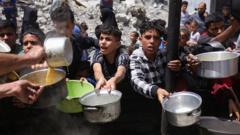
Despite Wood's departure, GHF has pledged to begin relief efforts immediately, aiming to deliver aid to one million individuals by week’s end. The organization contends that critics are focused on maintaining the status quo, rather than enabling innovative solutions to aid the beleaguered region. As the humanitarian situation in Gaza deteriorates rapidly, with at least 53,939 reported fatalities since the recent conflict escalation, the international community continues to grapple with effective and neutral means of delivering assistance.---In a move that has further intensified the debate over humanitarian assistance in Gaza, Jake Wood, the head of the Gaza Humanitarian Foundation (GHF), resigned on Sunday, emphasizing that the agency cannot adhere to fundamental humanitarian principles amid a contentious distribution plan backed by Israel and the US. Wood cited the core principles of "humanity, neutrality, impartiality, and independence" as being incompatible with the GHF's operations, which seek to address the ongoing hunger crisis exacerbated by the conflict.The GHF, created to aid Palestinians through private contractors at designated distribution points within Gaza, has come under fire from international bodies, including the United Nations, for being overly militarized and politically influenced. Despite Wood's resignation, the foundation announced its intention to commence aid distribution immediately, targeting assistance for one million Palestinians within the week.Israeli authorities have defended the need for this controversial plan, claiming it is necessary to prevent aid diversion by Hamas, which the militant group rejects. Critics, including UN officials, have voiced skepticism regarding the feasibility of the plan, questioning how the most vulnerable populations—particularly the injured and elderly—will access aid effectively.As the conflict in Gaza escalates following Israel's military response to the Hamas attacks on October 7, humanitarian organizations are facing critical challenges in delivering aid to an increasingly desperate population. With reports indicating thousands of civilian casualties amidst the ongoing clashes, the potential humanitarian crisis continues to unfold, drawing urgent calls for reevaluation of aid strategies in the tumultuous region.

