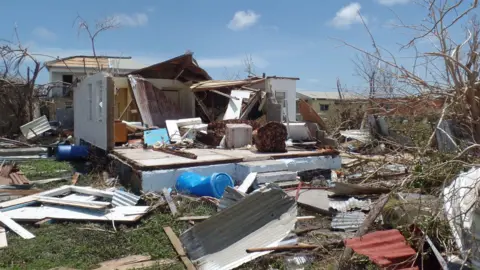
For some Barbudans, thunderstorms still trigger flashbacks of the night in September 2017 when they lost everything they owned to Hurricane Irma's devastating winds. Eight years on, while memories may be close to hand, home insurance for many on Barbuda and other islands in the Caribbean's hurricane belt is more prohibitively expensive than ever.
Across the region, premiums have surged by as much as 40% on some islands in the past two years, reflecting the increasing risk associated with more intense cyclones coupled with small populations, leading to lower payouts for insurance companies. Experts point out that the lack of affordable insurance leaves most homes vulnerable.
Dwight Benjamin, a resident of Barbuda, has fortified his home after the traumatic experience of Irma. He reveals that many Barbudans regard insurance as an unnecessary expense amidst their limited resources and trust in the strength of their homes. As the peak hurricane season unfolds, anxiety mounts among residents like Benjamin, who keep a close watch on weather reports and prepare for potential threats.
Uninsured properties are a grave concern, with statistics revealing that only 20% of homes in Jamaica and around half in Barbados are covered. Beyond hurricanes, the Caribbean faces threats from earthquakes and volcanic activity, compounding the challenges for insurers in this vulnerable region.
Preparedness efforts are ongoing, with authorities working on building safety measures and ensuring community resilience. The region's unique challenges require innovative solutions, such as the Caribbean Catastrophe Risk Insurance Facility, which aims to alleviate some financial burdens by enabling governments to access insurance at lower rates.
The emotional toll of past hurricanes remains palpable. Residents continue to confront their trauma while striving for resilience, demonstrating a profound will to survive and rebuild despite the looming threat of nature's fury.
Across the region, premiums have surged by as much as 40% on some islands in the past two years, reflecting the increasing risk associated with more intense cyclones coupled with small populations, leading to lower payouts for insurance companies. Experts point out that the lack of affordable insurance leaves most homes vulnerable.
Dwight Benjamin, a resident of Barbuda, has fortified his home after the traumatic experience of Irma. He reveals that many Barbudans regard insurance as an unnecessary expense amidst their limited resources and trust in the strength of their homes. As the peak hurricane season unfolds, anxiety mounts among residents like Benjamin, who keep a close watch on weather reports and prepare for potential threats.
Uninsured properties are a grave concern, with statistics revealing that only 20% of homes in Jamaica and around half in Barbados are covered. Beyond hurricanes, the Caribbean faces threats from earthquakes and volcanic activity, compounding the challenges for insurers in this vulnerable region.
Preparedness efforts are ongoing, with authorities working on building safety measures and ensuring community resilience. The region's unique challenges require innovative solutions, such as the Caribbean Catastrophe Risk Insurance Facility, which aims to alleviate some financial burdens by enabling governments to access insurance at lower rates.
The emotional toll of past hurricanes remains palpable. Residents continue to confront their trauma while striving for resilience, demonstrating a profound will to survive and rebuild despite the looming threat of nature's fury.