
In brief
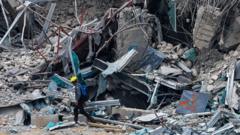
The recent 7.7-magnitude earthquake in Myanmar resulted in over 1,000 fatalities and caused the collapse of a high-rise building in Bangkok, highlighting concerns surrounding construction safety and geological vulnerabilities.
The seismic event that struck Myanmar on Friday, registering a powerful 7.7 on the Richter scale, has left significant devastation in its wake, claiming more than 1,000 lives and leading to numerous structural failures. While earthquakes are common in Myanmar, the effects were felt remarkably far away in Thailand's capital, Bangkok, which is typically not considered an earthquake-prone area. This article explores the causes of the earthquake and the reasons behind a skyscraper collapse in Bangkok as a result.What triggered the earthquake? The Earth's crust is divided into several tectonic plates that are constantly in motion. These plates can either slide alongside one another or move above and beneath each other. This tectonic activity is a primary driver of earthquakes and volcanic eruptions. Myanmar is located at the confluence of four significant plates: the Eurasian, Indian, Sunda, and Burma microplates, making it one of the most geologically unstable regions globally. The Sagaing fault, stretching over 1,200 km (746 miles) from north to south through Myanmar, is noteworthy for its potential to generate powerful seismic events.The recent earthquake's moment magnitude suggests it was a "strike-slip" event, typical of the movements along the Sagaing fault. In essence, tectonic plates become stuck due to friction, accumulating pressure until they suddenly shift, resulting in an earthquake.Why was the earthquake felt so distantly? The depth of earthquakes can significantly influence their impact. This earthquake occurred just 10 km (6.2 miles) below the surface, classifying it as shallow and thereby generating intense surface shaking. Its strength, measured at 7.7, surpassed the atomic bomb dropped on Hiroshima, as indicated by the US Geological Survey. Dr. Rebecca Bell of Imperial College London explains that the fault type, which allows for substantial ruptures, results in a more significant seismic impact. Consequently, seismic energy traveled down the fault towards regions, including Bangkok, located over 1,000 km (621 miles) away.Moreover, the geological composition of Bangkok, predominantly soft soil, exacerbated ground shaking as seismic waves slowed down and intensified. Why did only one high-rise fail in Bangkok? While many buildings in Bangkok swayed during the quake, the unfinished headquarters of the auditor-general's office became the sole skyscraper to collapse. Notably, until 2009, Bangkok lacked comprehensive building codes designed to ensure earthquake resilience. Thus, many older structures remain vulnerable.However, despite the new building codes, the collapsed structure employed a "flat slab" construction technique, regarded as unsuitable for earthquake areas. Dr. Christian Málaga-Chuquitaype, an earthquake engineering lecturer, noted that this design can compromise building integrity during seismic events, leading to sudden failures.What about the structures in Myanmar? Mandalay, much closer to the earthquake's epicenter, experienced more severe shaking. However, the lack of stringent building regulations and the country's ongoing struggles, including political chaos, have resulted in many structures lacking critical earthquake-resistant designs. Vulnerable regions in Mandalay, particularly those near the Ayerwaddy River's floodplain, face additional threats, such as liquefaction, where saturated soil loses its strength, causing buildings to collapse.As the country continues to assess earthquake damages and prepare for potential aftershocks, experts caution that building near fault lines remains hazardous. Dr. Emily So, a professor of architectural engineering, emphasizes the importance of enforcing robust building codes to mitigate future risks.This ongoing disaster highlights the necessity for improved construction practices in earthquake-prone areas and the importance of preparedness and resilience in both Myanmar and surrounding regions.
