
In brief
The UN human rights team points to egregious human rights violations in Bangladesh, amidst a violent crackdown by former Prime Minister Sheikh Hasina's government against protesters, estimating over 1,400 fatalities primarily at the hands of security forces.
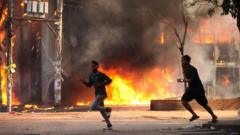
In a significant development regarding the unrest in Bangladesh, a UN report has described the former government's violent crackdown on protesters as potentially amounting to "crimes against humanity." Investigators accuse former Prime Minister Sheikh Hasina and her ruling Awami League Party of implementing a systematic and brutal response to widespread opposition during the protests of last year. The report suggests that up to 1,400 individuals were killed, with the majority being victims of security forces.The situation escalated from student-led demonstrations against civil service job quotas into a national movement aimed at ousting Hasina after a deadly police crackdown. The unrest marked the worst violence Bangladesh had experienced since its 1971 war of independence. Presenting the findings in Geneva, UN human rights chief Volker Türk noted that there were reasonable grounds to believe that the former government was complicit in serious human rights violations, which were reportedly orchestrated by both political leaders and senior security officials.Evidence gathered by the UN team included accounts of protesters being shot at close range, arbitrary arrests, and instances of torture. Alarmingly, the report indicated that children constituted up to 13% of those killed between July and August of 2022. Türk described the government's brutal response as a calculated strategy to suppress dissent and maintain power amidst burgeoning unrest.Seeking to hold those responsible accountable, the UN report details systemic state violence and targeted killings, with claims suggesting significant extrajudicial killings and widespread abuses were conducted with the knowledge of political leadership. The former government fled in the face of mounting public rage, culminating in Hasina's escape to India shortly before her residence was stormed by protesters.The report, compiled from over 230 interviews with survivors, witnesses, and further material analyses, was spearheaded at the behest of Bangladesh's interim leader, Muhammad Yunus, who expressed a commitment to reforming the nation into a more secure and dignified society. Contrary to the UN’s findings, the government maintains that only 834 deaths occurred during the unrest.While attributing much of the violence to government security forces, the report also emphasizes the necessity of investigating retaliatory attacks against those associated with the former regime and against various religious and ethnic minorities. The call for accountability highlights ongoing concerns regarding human rights in Bangladesh and the imperative for safeguarding freedoms within the nation's future political landscape.
