
In brief
Palestinian medics report at least 30 fatalities, including children, from a recent Israeli airstrike in Jabalia, as the international community demands improved humanitarian conditions in Gaza.
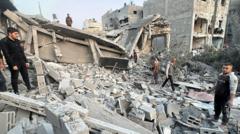
Palestinian medics and rescuers are reporting a devastating Israeli airstrike on a residential building in Jabalia, northern Gaza, resulting in numerous casualties. The official Palestinian news agency Wafa has cited at least 30 dead, with the majority being innocent civilians, among them 13 children according to the Hamas-run civil defense agency. The Israel Defense Forces (IDF) have stated that the strikes aimed at a site where "terrorists were operating," claiming they took measures to reduce civilian harm, although these assertions are currently under review.The area has been under severe siege since early October when Israel commenced a renewed ground offensive against Hamas. As the humanitarian crisis worsens, Israel is pressed to enhance conditions in Gaza or face potential military cooperation restrictions imposed by the US by an upcoming deadline.Dr. Fadel Naim, director of Gaza City's Al-Ahly Hospital, reported receiving 17 bodies, predominantly of women, underscoring the growing toll of the violence. Eyewitnesses described the event as catastrophic, likening the strike to an "earthquake." Hamza Alloush, a relative of victims, recounted the horror of the strike, stating that many were left scattered among the ruins, as the building was bombed with no prior warning.Visual evidence showcased the aftermath, including multiple bodies transported in makeshift arrangements to the local hospital. The lack of independent reporting from international media, often curtailed in Gaza, complicates verification of these accounts, which are primarily derived from eyewitness narratives and available footage.Another recent strike reportedly took the life of a welfare ministry official, along with seven family members, further contributing to the worsening humanitarian situation. The UN has expressed alarm, signaling that this may be one of the darkest periods in Gaza's history, with nearly 70% of casualties consisting of women and children—attributed largely to the use of wide-area effect weapons in densely populated locales.As Israel disputed claims of an impending famine in northern Gaza, citing biased data, aid entities have emphasized the immediate need for genuine humanitarian interventions. While Israel claims to have enhanced its aid efforts by opening additional crossings, the situation remains dire.The UN’s Human Rights Office has provided alarming statistics indicating that the majority of casualties occur from strikes on residential buildings, attributing the high civilian toll partly to the manner in which the conflict is being conducted. As calls for a ceasefire falter, Qatar has suspended mediation efforts, awaiting a commitment from both Hamas and Israel to engage in meaningful negotiations.Gaza’s Hamas-run health ministry claims that over 43,600 people have died since the conflict escalated, with many more presumed trapped beneath rubble, highlighting the urgent need for a humane resolution to the ongoing violence following Hamas's assault on Israel on October 7, which resulted in approximately 1,200 Israeli casualties and took 251 hostages.