In brief
The Hab-1 project simulated space conditions over three weeks, helping identify challenges astronauts may face, while setting a foundation for India's future space endeavors, including its Gaganyaan mission slated for next year.
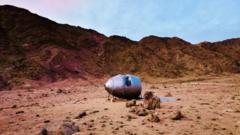
India's space agency, Isro, has embarked on a groundbreaking endeavor with its first analog space mission, Hab-1, designed to simulate conditions astronauts could face on the Moon or Mars. Recently tested in the profound altitude of the Himalayan mountains in Ladakh, this egg-shaped habitat aims to provide insights into living in the harsh terrains of outer space.Developed by AAKA Space Studio, under the direction of architect Aastha Kacha-Jhala, Hab-1 is a crucial part of India's preparation for future manned missions. The facility, constructed from space-grade Teflon and insulated with industrial foam, includes practical amenities like a bed, kitchenette, toilet, and a workstation. It offers a glimpse into the future of Indian space habitats, keeping in mind the limited resources astronauts will experience on celestial bodies. During the three-week mission, an astronaut lived in isolation within Hab-1, mirroring potential realities faced in space. Kacha-Jhala emphasized the habitat's design catered to minimizing waste and even featured a dry toilet, critical for conserving water in space-scarce environments.As part of Isro's ambitious Gaganyaan mission, which aims to send astronauts into low Earth orbit next year, the Hab-1 analog mission aligns with India's intentions to establish a robust presence in space. The nation is also targeting to build its own space station by 2035 and to send a human to the Moon by 2040.Prof. Subrat Sharma from Ladakh University noted that analog missions are vital in reducing dependence on foreign agencies for astronaut training. The extreme conditions of Ladakh — with its rocky terrain and significant altitude — provide an ideal environment for testing space scenarios, offering similarities to Mars and the Moon’s landscapes.The simulations have highlighted the psychological factors impacting astronauts as well. During his confinement, the anonymous astronaut reported a stark sense of isolation, structured routines, and the effects on sleep and concentration, reflecting the mental challenges of long-duration space missions.Global interest in such simulations is rising as multiple countries, including the U.S., China, and Russia, continue to explore their own human spaceflight programs. The data gathered from these missions in regions like Ladakh is crucial not only for astronaut training but also for developing technologies suited for the challenging conditions of space.With Hab-1, India is not only advancing its preparations for human spaceflight, but is also gathering critical insights on how to ensure the health and performance of its astronauts in the unique environments of our solar system.