
In brief
The olive harvest, crucial to the Palestinian economy, faces increasing dangers from Israeli soldiers and settlers, culminating in tragic violence and widespread crop loss.
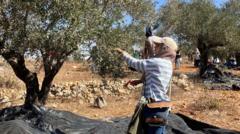
The olive harvest season in the West Bank, an essential agricultural activity and cultural tradition for Palestinians, is facing severe threats due to a rise in violence and restrictions imposed by Israeli forces and settlers. A recent incident highlighted this precarious situation when 59-year-old Hanan Abu Salameh was shot and killed by an Israeli soldier while collecting olives on her family's land near Faqqua. Despite her family's prior coordination with the Israel Defense Forces (IDF), tragedy struck as gunfire erupted, leaving her family in shock and mourning. Hanan’s relatives harbor little faith that any justice will come from the investigation launched by the IDF.Unfortunately, Hanan's death is part of a larger trend. Many farmers in the West Bank report that violent encounters have become common, significantly hindering their ability to harvest olives. Omar Tanatara, a farmer from Umm Safa, recounted how last year his harvest was sabotaged by the army, emphasizing that many of his neighbors also faced similar violent restrictions that resulted in injuries and the destruction of olive trees.Even with the presence of Israeli and international activists attempting to provide protection and assistance, farmers' safety remains at risk. Zuraya Hadad, an Israeli activist helping at the harvest, described a disturbing incident where she was attacked, and instead of arresting her assailant, soldiers merely instructed him to leave the area.According to UN reports, the challenges faced by Palestinian farmers are exacerbated by settlers’ aggressive actions, which include burning or cutting down olive trees, and systematic restrictions on access to their lands. In 2023, UN officials noted that over 96,000 dunums of olive groves remained uncultivated due to these restrictions, severely impacting the Palestinian economy.The olive harvest is more than just an economic necessity; it represents a deep cultural and historical connection to the land for thousands of Palestinian families. Olives contribute an estimated $70 million annually to the Palestinian economy, but the recent years have seen a continuous decline due to the violence and access issues farmers face.Factory owner Abd al-Rahman Khalifa pointed out the dire state of affairs, stating that many of his neighbors can no longer access their groves safely. The situation has worsened since the escalation of conflict in Gaza, which has emboldened settlers, particularly influenced by far-right Israeli political figures who encourage disruptions to Palestinian farming activities.As farmers wait for their olives to be transformed into oil, the olive tree stands as a symbol of resilience, yet it faces unprecedented threats. The ongoing conflict raises critical questions about land rights, access, and survival for Palestinian communities deeply intertwined with their agricultural heritage.


