
In brief
Amid escalating violence and food shortages, pregnant women in Gaza face unprecedented challenges. Many are giving birth without medical assistance, while a significant number of newborns are underweight or suffer from complications. The situation has led to devastating outcomes, highlighting the harrowing reality for families amidst the conflict.
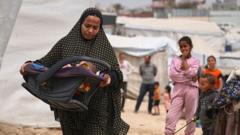
In Gaza, the experience of pregnancy and childbirth has transformed from celebration to anxiety and fear for many women amid relentless warfare. The severe conditions have placed newborns and expectant mothers on perilous ground, with the United Nations reporting that one in ten newborns is underweight or born prematurely. Increased rates of miscarriage, stillbirths, and congenital anomalies add to the grim reality.At Nasser Hospital in Khan Younis, Malak Brees, seven months pregnant, is filled with dread about potential premature labor, worried that the Israeli bombings and her own malnutrition may threaten her baby's health. "The doctors told me it was due to malnutrition... it’s in the hands of God," she recounted.The dire situation in Gaza is exacerbated by the Israeli blockade, which has severely restricted medical supplies, including essential pain relief and hygiene products. Unable to reach hospitals, some women have no choice but to deliver their babies in makeshift tents or shelters. Those fortunate enough to give birth in hospitals face early discharge, often within hours, to homes devoid of basic healthcare support.Sandra Adler Killen, an American nurse, has reported that the overwhelmed Nasser Hospital's neonatal intensive care unit is full, as their services are strained since the nearby European hospital was put out of commission due to bombings. The increase in childbirth complications is alarming, with a lack of regular pre-natal checks leaving many women worried about their unborn babies' futures.Dr. Ahmad al-Farra from Nasser Hospital lamented, "The psychological state of the women at this point is heartbreaking." Most mothers struggle not just with physical health, as malnutrition hampers their ability to produce milk, but also with the emotional toll stemming from the uncertainty of feeding their newborns.Jenan, whose mother Aya al-Skafi fought to provide her with proper nutrition, tragically succumbed to malnutrition after her mother could not secure the necessary formula as supplies dwindled. "I begged for help, but only God, Lord of the World answered," Aya said tearfully, recounting the loss of her daughter.As many mothers cannot rely on familial support due to displacement, stories from the war-torn region highlight growing desperation, with health workers like Killen witnessing the devastation firsthand. Women give birth in isolation amidst the chaos, making the maternal experience fraught with despair rather than joy.The issue stretches beyond individual stories; it underscores systemic failures driven by the ongoing conflict, where pregnant women's rights to healthcare are virtually non-existent. The heartbreaking anecdotes reflect a state of emergency, showcasing how in Gaza, childbirth has sadly become a struggle for survival in face of overwhelming odds. The situation ends with a troubling realization: what should represent hope—the birth of a child—has now morphed into a daily battle for existence.

