
In brief
The capital's air quality index soars to alarming heights, triggering health warnings and governmental responses.
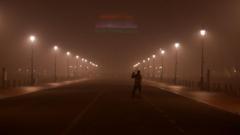
Air pollution in Delhi has hit staggering levels, with the city now experiencing "severe plus" conditions, choking residents in a thick layer of smog. According to readings from tech firm IQAir, the pollution level spiked to a staggering 1,500 at 15:00 IST (10:30 BST) on Monday, which is 15 times higher than the World Health Organization's (WHO) recommended safe level for breathing. The toxic atmosphere has had immediate consequences, including disruptions in flight services. Authorities responded by closing schools and halting construction work across the city. This alarming situation mirrors recent pollution troubles in neighboring Lahore, Pakistan, which also reported pollution levels exceeding 1,000. Experts warn the scenario in Delhi may worsen in the days to come, emphasizing that stronger actions may be necessary to tackle the city's persisting pollution crisis. The WHO categorizes air with an Air Quality Index (AQI) above 300 as hazardous, and India's pollution control authority has marked Delhi's air as "severe plus," after the AQI surpassed 450 early Monday morning. In a bid to mitigate the dire situation, the city has imposed restrictions that include banning non-essential trucks from entering Delhi and instructing offices to allow 50% of their workforce to operate from home. Additionally, activities involving coal, firewood, and diesel generators for non-emergency purposes have been prohibited. Year after year, Delhi and surrounding northern states contend with perilous air quality during the winter months, attributed to colder temperatures, smoke, dust, stagnant winds, vehicle emissions, and agricultural stubble burning. Yet, despite annual governmental interventions, the pollution crisis recurs. Delhi's Chief Minister Atishi voiced her concerns on Monday, asserting that all of northern India is facing a "medical emergency," largely due to the unchecked stubble burning prevalent in neighboring states such as Haryana, Uttar Pradesh, and Bihar. She criticized the ruling Bharatiya Janata Party (BJP) for failing to address the issue effectively over the past five years. In response, the BJP has blamed the Aam Aadmi Party (AAP) for not adequately tackling pollution in Delhi.As the air quality continues to decline, residents are expressing their despair. One individual recounted waking up with a painful, itchy throat and noted that even two air purifiers could not make the indoor air breathable, describing it as a "gas chamber" for children. Another urged for collective action, calling for a "peaceful mass protest" in response to the toxic air they are forced to breathe.

