
In brief
Kenyan coffee farmers, like Simon Macharia, who have long cultivated the esteemed Kenya AA coffee beans, are increasingly confronting the dire impacts of climate change. This challenge is exacerbated by low wages, erratic weather, and rising pest invasions, jeopardizing their traditions and survival.
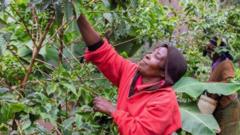
In the vibrant volcanic highlands of Komothai, located in Kenya's Rift Valley, the art of coffee farming is deeply rooted in tradition. Farmers such as Simon Macharia devote themselves to cultivating coffee beans on small plantations that dot the hillside. Each harvest is a labor-intensive process, requiring months of diligent care, from picking cherries to processing the delicate beans.Mr. Macharia, who manages 2.5 hectares (six acres) of land, is one of many coffee growers who transport their fresh coffee cherries to local processing plants. Here, the cherries undergo careful processing, where the red outer husk is removed, revealing the pale beans. These beans are then washed and categorized based on quality, with the highest grades destined for international markets, particularly the European coffee houses that prize their unique flavor.With a history tracing back to the late 1890s, when British settlers introduced coffee to the region, Komothai has gained fame for its high-quality coffee. "We call coffee the black gold around here," shared Mr. Macharia, highlighting the product's significance and commercial value. However, while the price of quality coffee in European cafes can soar to $4 (£3.20) a cup, many Kenyan farmers labor for less than $3 a day, and workers like Edita Mwangi have to endure extreme financial hardship, often earning just $1.40 daily.Farmers are increasingly voicing concerns about the inequitable trading systems favoring European markets while impoverishing local laborers. Despite persistent dedication to their craft, climate change is posing an additional threat that undermines the farmers’ livelihoods. The delicate coffee trees require stable climatic conditions, with specific needs for moisture and temperature. John Murigi, chairman of the Komothai Coffee Society, which supports around 8,000 coffee farmers, noted that climate change is wreaking havoc on local crops. Erratic weather patterns have resulted in declining coffee production, with diseases like coffee berry disease wreaking havoc on yields. Increased reliance on chemical pesticides and herbicides, such as glyphosate, presents long-term soil health issues and prevalent health risks for farmers and their families.In this already challenging environment for coffee growing, dwindling water supplies exacerbate the predicament. Farmers report continuous reductions in river levels, leading to over-extraction of precious water resources due to compulsory irrigation needs. Though Mr. Murigi refutes claims that farming practices are solely responsible for drying rivers, the ongoing droughts and changing rain patterns cannot be ignored.The implications of climate change extend beyond Kenyan farmers, as global shifts are increasingly impacting coffee production across the world. Coffee can only thrive in specific regions known as the "coffee belt," generally between altitudes of 1,000m and 2,000m. Recent drought conditions and crop failures in major coffee-producing countries such as Brazil and Vietnam have exerted further pressure on the global market, leading to price surges that leave farmers feeling marginalized.In light of the challenges, 93% of Kenyan coffee farmers are reporting the negative impacts of climate change on their operations, as per a Fairtrade International survey. The coffee sector is a vital provider of employment for approximately 150,000 individuals in Kenya, lending urgency to the situation.However, hope remains as farmers in Komothai explore adaptive practices like tree planting to provide shade and protect their valuable crops. Mr. Murigi believes the path toward a sustainable future for coffee farmers lies in addressing both climate and economic challenges. Yet, sentiments of pessimism loom among farmers, like Mr. Macharia, who fear for the next generation. "Right now, as things stand, I don't think any parent wants their child here farming coffee," he lamented, reflecting the dire realities of rural coffee cultivation in an increasingly uncertain world.

