
In brief
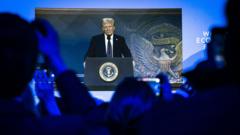
During his address to global leaders at Davos, President Trump made bold declarations about America's economy and issued provocative threats regarding tariffs, particularly towards Canada. As world elites listened, a complex dialogue began surrounding the implications of his second-term agenda on international trade.
In a staggering display of influence, President Donald Trump remotely addressed the annual World Economic Forum in Davos from the White House, presenting an ultimatum to the global elite. Gathering in the picturesque Swiss town, leaders from across the globe, including business moguls and celebrities, listened intently as Trump painted a picture of a robustly growing U.S. economy poised to dominate international markets.“This is just the beginning,” he remarked confidently, setting the stage for what seemed like an economic coup. However, hidden beneath his charm lay veiled threats; he warned of substantial tariffs on international companies not moving their operations to the U.S., alluding to the potential for “trillions of dollars” in revenue from such measures. “Your prerogative,” he quipped, a chilling smile reminiscent of a cinematic villain.In this first week of his renewed presidency, Trump's address seemed designed to rattle some nerves and impress others. It was one thing to address trade deficit concerns domestically but another to insinuate that U.S. ally Canada might need to become a state to sidestep tariffs. The comment drew gasps, with attendees absorbing the implications of his aggressive economic posture.Trump's agenda also aimed to counteract rising energy costs by urging a reduction of oil prices from OPEC, a strategy he claimed could alleviate inflation and undermine funds funneled towards Russia's military actions in Ukraine. His political credibility was subtly acknowledged in Davos as he discussed a recent ceasefire in the Middle East.Amidst a lineup of influential figures, including Christine Lagarde and John Kerry, discussions evolved regarding Trump's threats to the international economic order. While many in attendance nodded in agreement, the undertones of uncertainty about what his presidency would mean for global trade were palpable. Executives expressed concerns about potential retaliatory tariffs impacting their exports, leaving them to question how Trump's push for a soaring stock market might influence his tariff strategy.Canada quickly emerged as a focal point of potential retaliatory measures. Conversations among European officials suggested a desire to engage in constructive dialogue, although they acknowledged the absurdity of Trump’s G7 and NATO ally threats. The collective response from the international community remained cautious but tentative, with leaders like UK’s business secretary highlighting areas where the U.S. benefited from European services.As the U.S. continues to assert its tech supremacy, doubts linger regarding its standing against China, especially with mentions of emerging competitors in AI from the East. While the tech titans of the U.S. enjoyed a prime viewing at the forum, discussions surrounding the appeal of U.S. political dynamics drew attention, hinting at an unforeseen opportunity for Europe to attract talent disenchanted with the current administration.The dynamics at play during this year's Davos speak volumes about the shifting landscape of global trade under Trump's leadership. As both sides reassess their strategies, the ramifications of this pivotal moment could extend well beyond the immediate horizon. President Trump is reshaping the terms of global commerce, and the forthcoming responses could potentially redefine international relationships for years to come.


