In brief
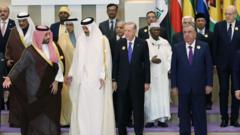
At a summit focusing on the conflict in Gaza, Saudi Crown Prince Mohammed bin Salman has denounced Israel's military actions as “genocide,” representing one of the most severe criticisms from a Saudi leader amid escalating tensions. His remarks come in the backdrop of ongoing hostilities that erupted following Hamas's earlier attacks, resulting in substantial casualties on both sides. Alongside Prince Mohammed, leaders at the summit expressed calls for a complete Israeli withdrawal from occupied territories, and Saudi officials highlighted a collective failure of the international community in responding to the crisis. Amid these developments, the geopolitical dynamics involving Riyadh and Tehran appear to be shifting, as tensions with Israel remain high.
In a significant shift in rhetoric, Saudi Crown Prince Mohammed bin Salman has condemned the Israeli military actions in Gaza as "genocide," marking one of the strongest critiques from Riyadi officials since the outbreak of the conflict. During a high-profile summit that brought together Muslim and Arab leaders, the Crown Prince not only criticized Israel’s operations but also referenced its attacks on both Lebanon and Iran. These remarks come amid Israel's strong denial of any wrongdoing, as it vies to dismantle Hamas's operational capabilities following the group's assault on October 7, which resulted in substantial loss of life.The ongoing war, which has already led to the death of over 43,000 individuals in Gaza, was sparked by Hamas's incursion into southern Israel that left approximately 1,200 people dead and scores taken hostage. The Crown Prince's comments echoed sentiments shared by other leaders at the summit, who unanimously called for Israel’s complete withdrawal from the West Bank and Gaza. Saudi Foreign Minister Faisal Bin Farhan Al-Saud emphasized the failure of the international community to act promptly and effectively in ending Israel's aggressive measures, lamenting the starvation crisis in Gaza.The urgency of the situation has compelled calls for greater international intervention, with many leaders condemning what they describe as Israel's relentless offensive against not just Palestinians but also United Nations personnel and facilities in the area. In its ongoing military campaign, the Israeli government has faced accusations from various nations and organizations regarding its treatment of Palestinian civilians, especially under the recent legislative changes that restrict UN aid operations in Gaza.The backdrop of the summit is further intensified by the potential return of Donald Trump to the White House, which some Gulf leaders view with a mix of hope and concern. While Trump is perceived more favorably in Saudi Arabia than the current administration, his history in the region encompasses both diplomatic successes and contentious policies that alienated key Muslim nations, particularly through his support for Israel's territorial claims. An editorial piece in a prominent Saudi publication alluded to this mixed sentiment toward the former president, asserting that his return could signal a "new era of hope" for stability in the Middle East.As global observers continue to monitor the volatile situation, the extent of Saudi criticism toward Israel underscores a critical moment in Middle Eastern politics, where long-standing alliances may face new tests amid humanitarian crises and potential shifts in diplomatic strategies.