
In brief
Auschwitz-Birkenau survivors gathered to honor memories of the past, urging global vigilance against hate and prejudice, amid dwindling voices from a painful history.
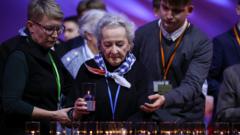
As the world reflects on the 80th anniversary of the liberation of Auschwitz, the testimony of the few remaining survivors takes center stage. At the site of one of history's most horrific atrocities, 56 survivors of the Nazi genocide gathered to deliver a stark warning: history must not repeat itself. Leon Weintraub, 99, the eldest speaker, poignantly remarked, "We were stripped of all humanity," as he stood at the infamous Death Gate at Birkenau. Accompanying him was Tova Friedman, who as a young child witnessed the brutal reality of Nazi persecution and described her fear and helplessness while hiding from the horrors surrounding her. The solemn event, attended by world leaders and European royalty, highlighted the dangerous currents of rising antisemitism and intolerance. "Those who forget the past are condemned to repeat it," warned Weintraub, who appealed especially to the youth to recognize and challenge manifestations of hatred in society. The Auschwitz-Birkenau camp was a site of unimaginable suffering, where over 1.1 million people were murdered between 1941 and 1945, including nearly a million Jews, alongside countless others. The day served as a reminder of the millions of victims who never had the chance to share their stories. Piotr Cywinski, director of the Auschwitz museum, spoke passionately about the importance of preserving historical memory. As survivors wore blue-and-white striped scarves representing prisoners' attire, he stressed, "Without memory, you have no history." In the wake of the event, Polish President Andrzej Duda announced that Poland would remain a guardian of memory for the six death camps within its borders. This sentiment was echoed globally at events marking International Holocaust Memorial Day, with leaders emphasizing the imperative of remembrance amid rising Holocaust denial and hate speech. King Charles III's historic visit, the first by a serving British monarch, was marked by his emotional responses to the testimonies shared by survivors. He emphasized the collective responsibility to confront the remnants of past evils and work toward a more compassionate future.Mala Tribich, a Polish-born survivor, warned of the dangers that arise from ignorance, stating, "What children are taught under the circumstances of a despot can be so damaging." With a recent survey revealing that many believe another Holocaust could occur, the urgency of these voices and their stories is more critical than ever. As the numbers of survivors dwindle, their memories and lessons stand as powerful beacons against the tides of hate and division.

