
In brief
Amidst ongoing pressures, leaders emphasize the importance of meaningful conversations regarding the historical injustices of slavery.
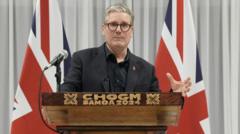
Commonwealth leaders have reached a consensus that the "time has come" to commence discussions regarding reparations for the transatlantic slave trade, a topic that the United Kingdom aimed to sideline at a recent summit in Samoa. A signed document by 56 heads of government, including UK Prime Minister Sir Keir Starmer, acknowledges the necessity for "discussions on reparatory justice" regarding the historical injustices inflicted by slavery.Despite this acknowledgment, Sir Keir clarified that no discussions about financial reparations took place, insisting the UK is steadfast in its position against paying reparations. Calls for the UK to apologize and compensate nations historically impacted by its role in the slave trade have been intensifying among Commonwealth leaders.Reparations can take various forms, encompassing financial compensation as well as symbolic acts. Leading up to the summit, UK officials were adamant that reparations would not be part of the discussions. Sir Keir described the two-day meeting as "positive," underscoring that the principal focus was on resilience and climate issues, downplaying the reparations topic to just one paragraph in an extensive joint statement.The prime minister reiterated the UK’s unchanged stance on the matter, despite the ongoing discourse. Sources from Downing Street confirmed that while the UK remains firm on its position, there is an acknowledgment of the importance of keeping the conversation about reparations ongoing, even if substantive changes seem improbable.For advocates of reparations, this dialogue marks progress. They argue that discussing reparatory justice is crucial for reconciling the UK’s colonial past. Meanwhile, the Prime Minister has indicated that future discourse could occur during the upcoming UK-Caribbean Forum in London, scheduled for next March, where more detailed discussions are anticipated.Frederick Mitchell, the Bahamas' foreign minister, expressed hope that the leaders would produce a "comprehensive report" on reparations at that forum. He believes the UK might eventually provide financial reparations to Caribbean nations as part of evolving discussions on reparatory justice.The topic of reparations is increasingly expected to gain prominence at future Commonwealth summits, with a UN judge estimating that the UK may owe over £18 trillion in reparations for its historical involvement in slavery across 14 Caribbean nations. Various forms of reparatory justice could be explored, including formal apologies, educational initiatives, and improvements in public health services.Shirley Ayorkor Botchwey, Ghana's foreign minister and the newly appointed Commonwealth Secretary General, expressed her commitment to investigating reparations further. Her statements reflect a growing consensus among Commonwealth leaders about the need to address historical injustices while navigating the intricacies of diplomacy and ongoing global issues like trade, climate change, and security.
